Alberta Road Signs Practice Test
Signs, traffic signals, markings and zones, with answers.
Traffic signs are a big part of the Class 7 knowledge test. These free questions cover regulatory and warning signs, traffic lights (including Alberta’s flashing green), and school and playground zones. Look at each sign, pick your answer, then tap Show answer to see the explanation. New to signs? Start with our lesson on sign shapes and colours.
These are original practice questions, not actual knowledge test questions. Each links to the page of the Alberta Driver’s Guide it’s based on, so you can check the rule. Questions were last reviewed in October 2026; read how we write and check them.
Question 1 · Signs and Signals
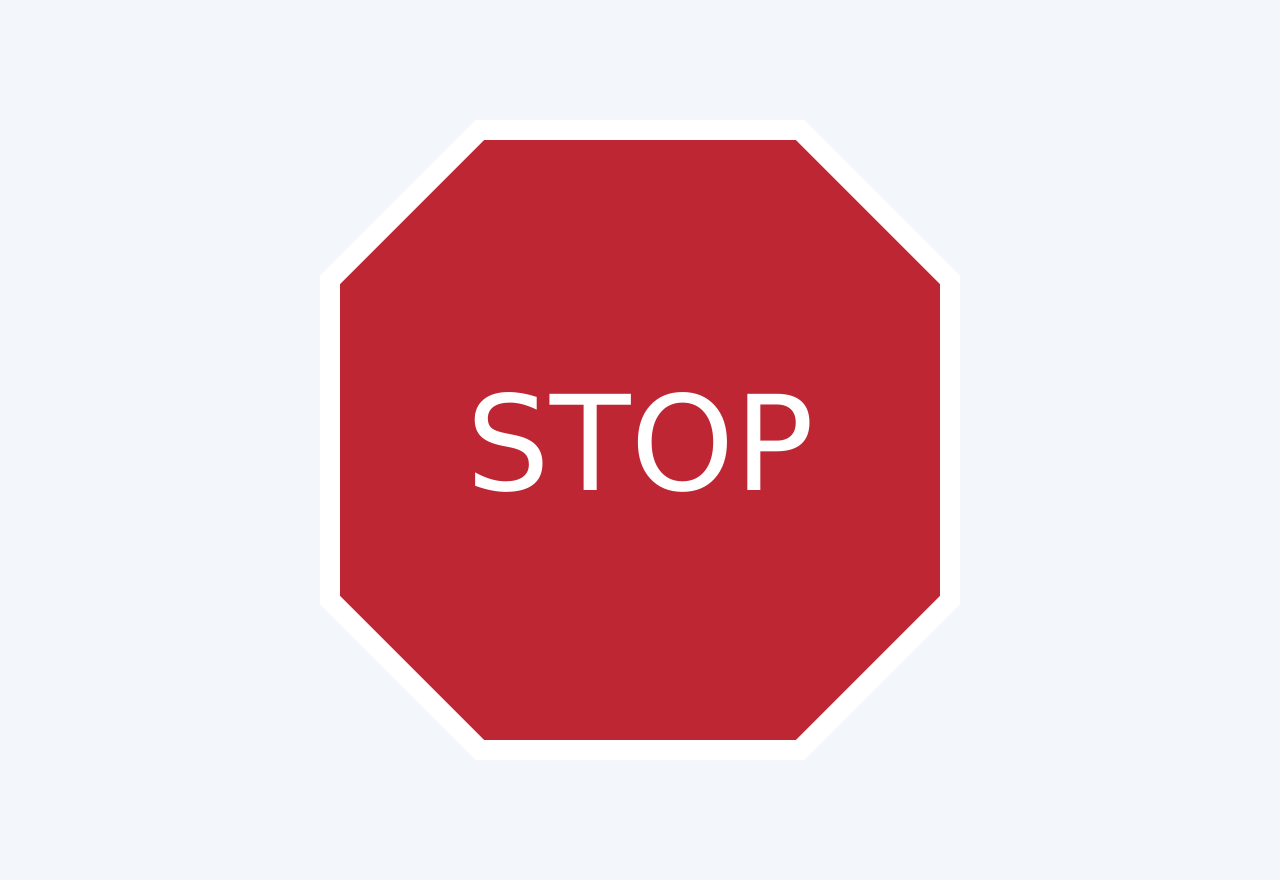
You reach this sign at a quiet neighbourhood intersection. What must you do?
- A. Stop only when pedestrians are in the crosswalk
- B. Slow to a crawl and continue if nothing is coming
- C. Come to a full stop, then go only when the way is clear
- D. Stop only if another vehicle is already waiting
Show answer
Answer: C. Come to a full stop, then go only when the way is clear
This sign always requires a complete stop. After stopping, yield to pedestrians and traffic before moving on.
Question 2 · Signs and Signals
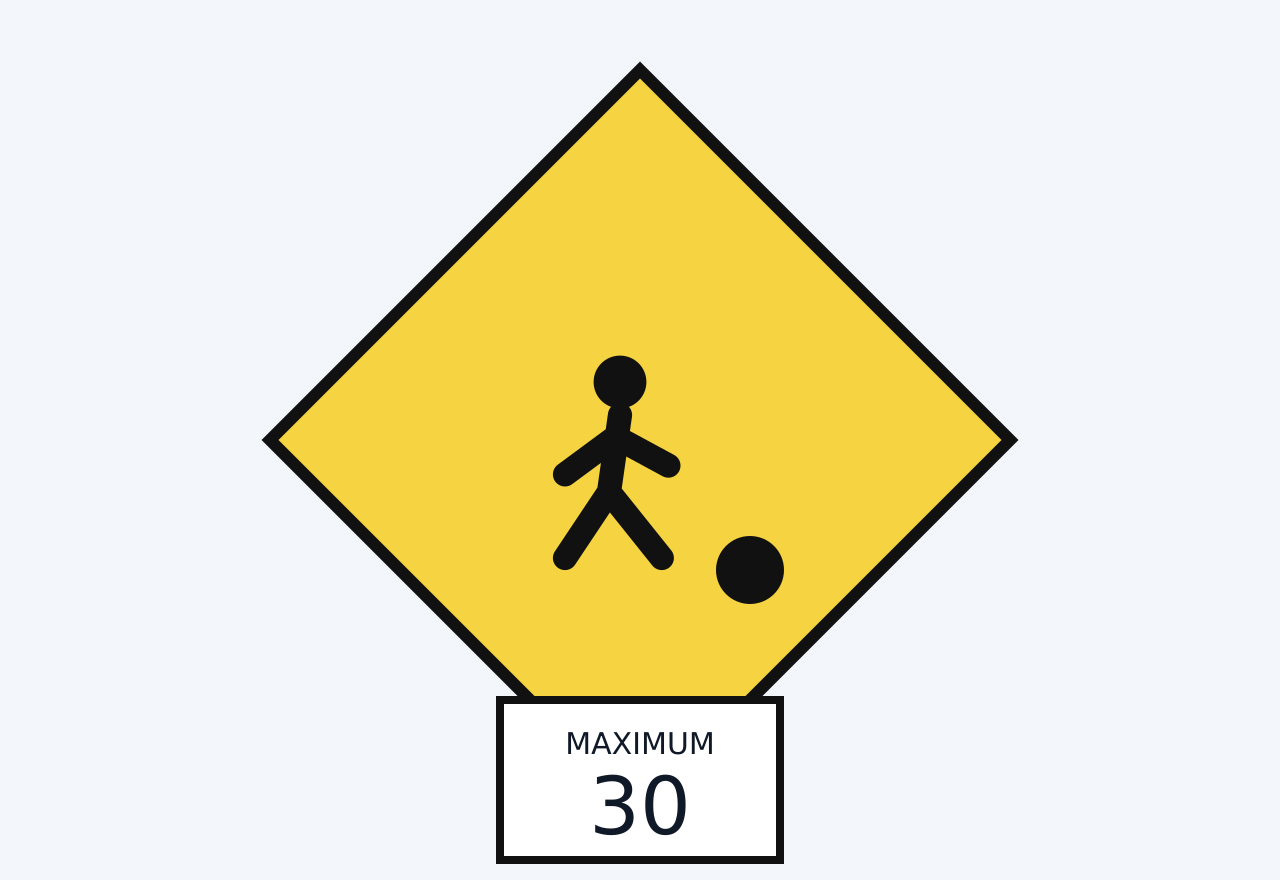
What does this sign with its speed tab mean?
- A. A playground zone with a 30 km/h limit during its hours
- B. A school zone that ends each day at 4:30 p.m.
- C. A playground area where 30 km/h is only suggested
- D. A 30 km/h limit that applies only on school days
Show answer
Answer: A. A playground zone with a 30 km/h limit during its hours
The playground sign with a speed tab marks a playground zone with a 30 km/h maximum during its hours.
Question 3 · Signs and Signals
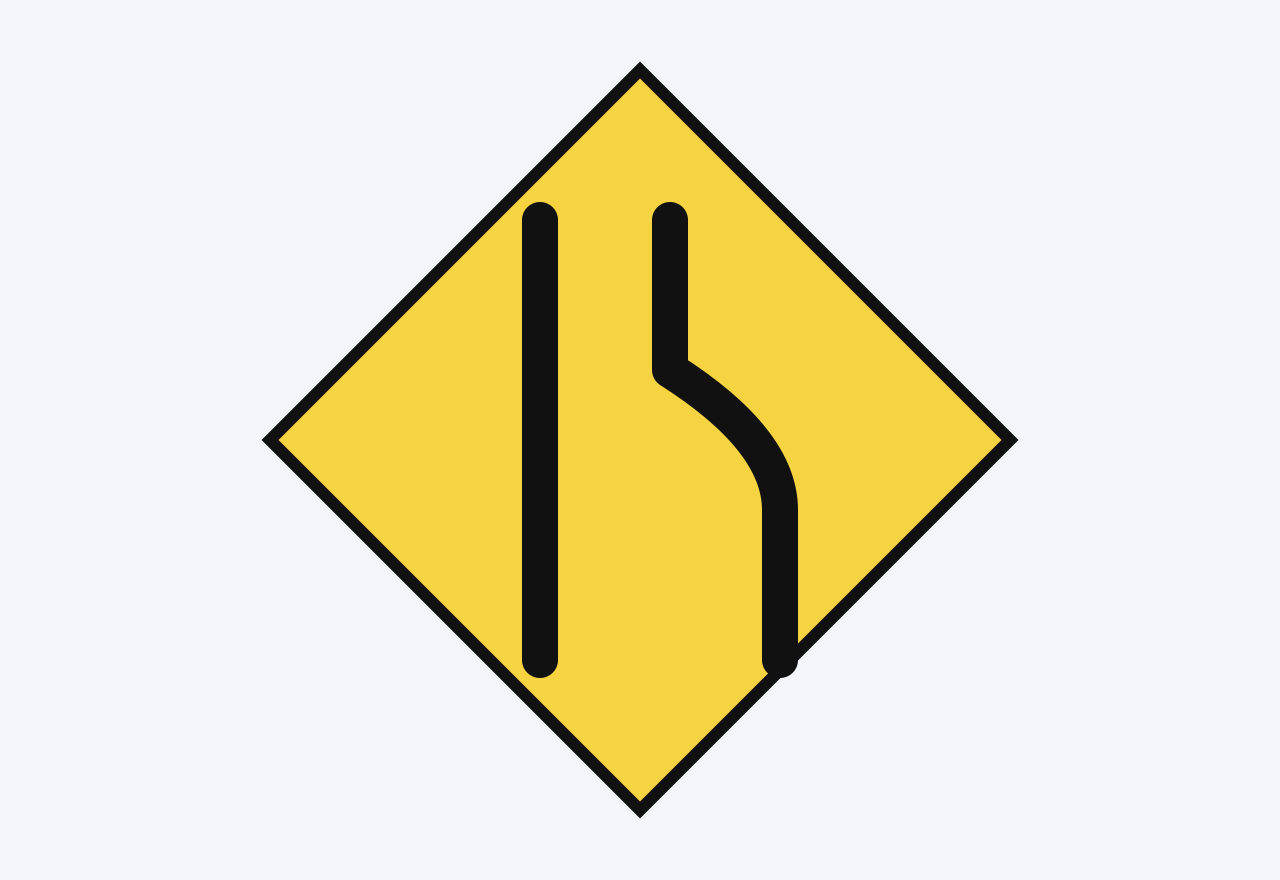
What does this sign warn you about?
- A. A lane is added ahead for passing
- B. A lane ends ahead, so traffic must merge
- C. Traffic is merging from a ramp on the right
- D. The road becomes one-way ahead
Show answer
Answer: B. A lane ends ahead, so traffic must merge
This sign warns that one lane is ending and drivers will need to merge.
Question 4 · Signs and Signals
When is a left turn at a red light permitted in Alberta?
- A. From any street, as long as no oncoming traffic is near the intersection
- B. From a one-way street onto another one-way street, after a full stop
- C. Never; it is always prohibited
- D. From a two-way street onto a one-way street only
Show answer
Answer: B. From a one-way street onto another one-way street, after a full stop
The only left turn allowed on red is from a one-way onto a one-way, after stopping and yielding.
Question 5 · Signs and Signals
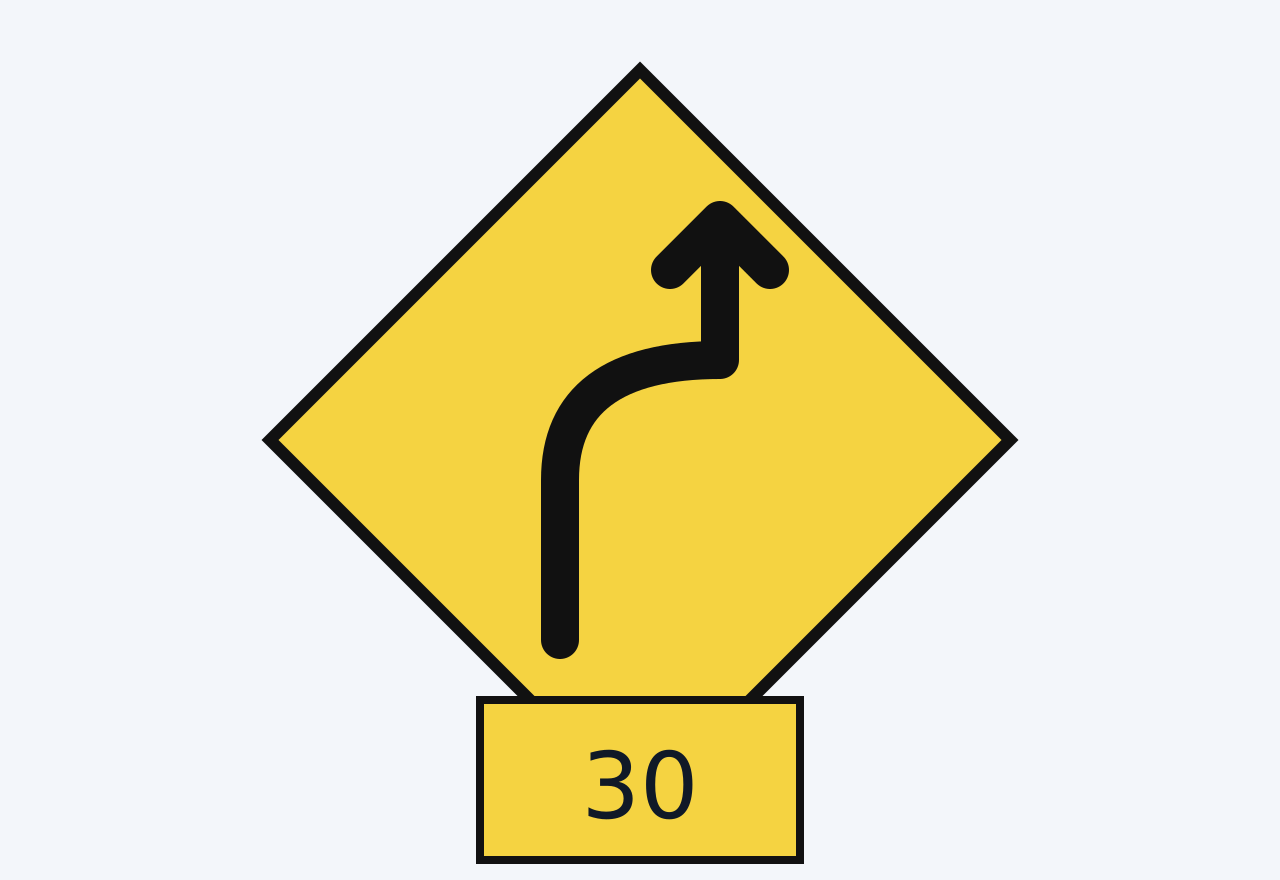
What does the yellow speed tab under this curve sign mean?
- A. The minimum speed allowed while in the curve
- B. The legal maximum speed for the whole road
- C. A speed limit that applies only to large trucks
- D. An advised safe speed for the curve in good conditions
Show answer
Answer: D. An advised safe speed for the curve in good conditions
A yellow tab under a warning sign shows a recommended speed for the hazard, not the legal limit.
Question 6 · Signs and Signals
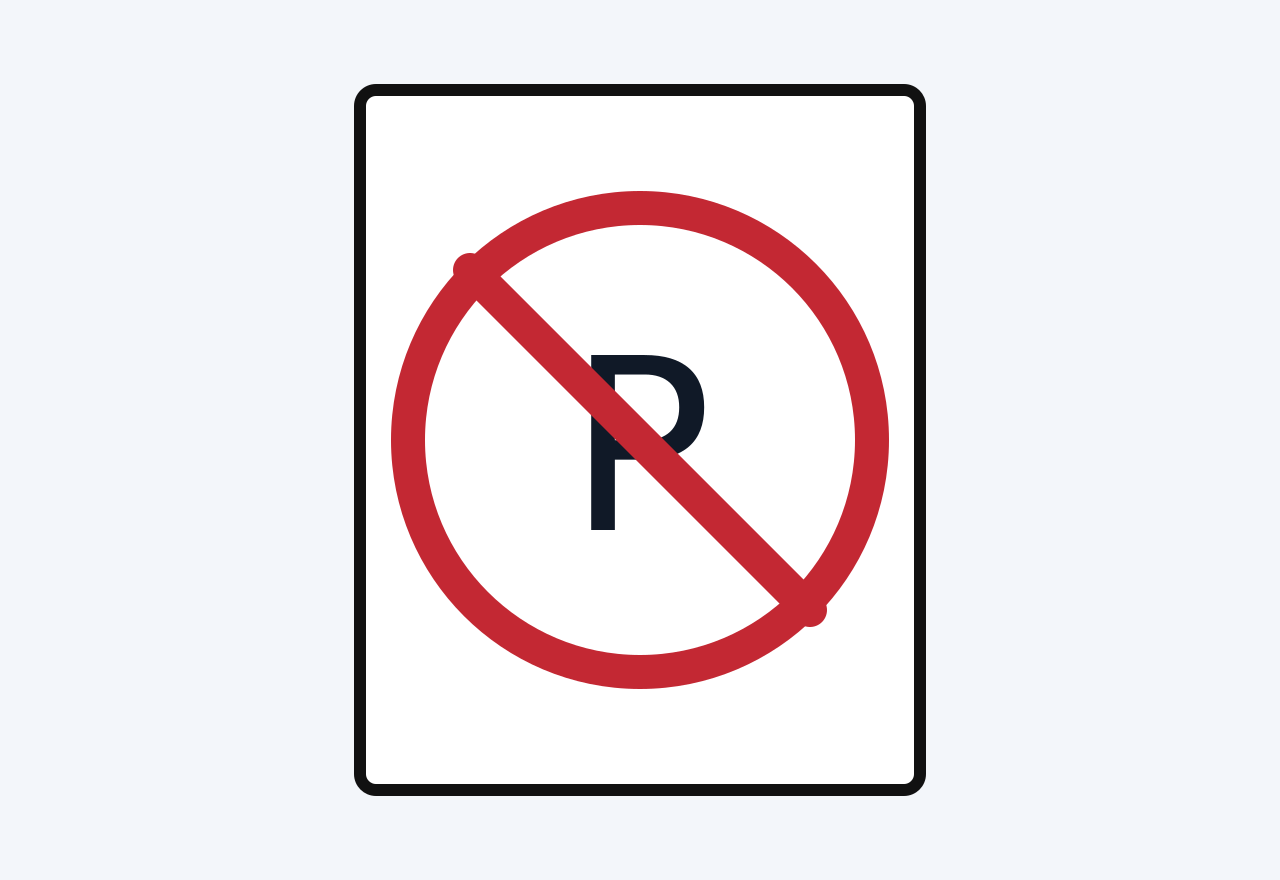
What does this sign mean?
- A. Parking is not allowed here
- B. Stopping is allowed but standing is not
- C. Only permit holders may park here
- D. Parking is allowed here for a short time only
Show answer
Answer: A. Parking is not allowed here
The red circle and slash over the P means no parking in the area the sign controls.
Question 7 · Signs and Signals
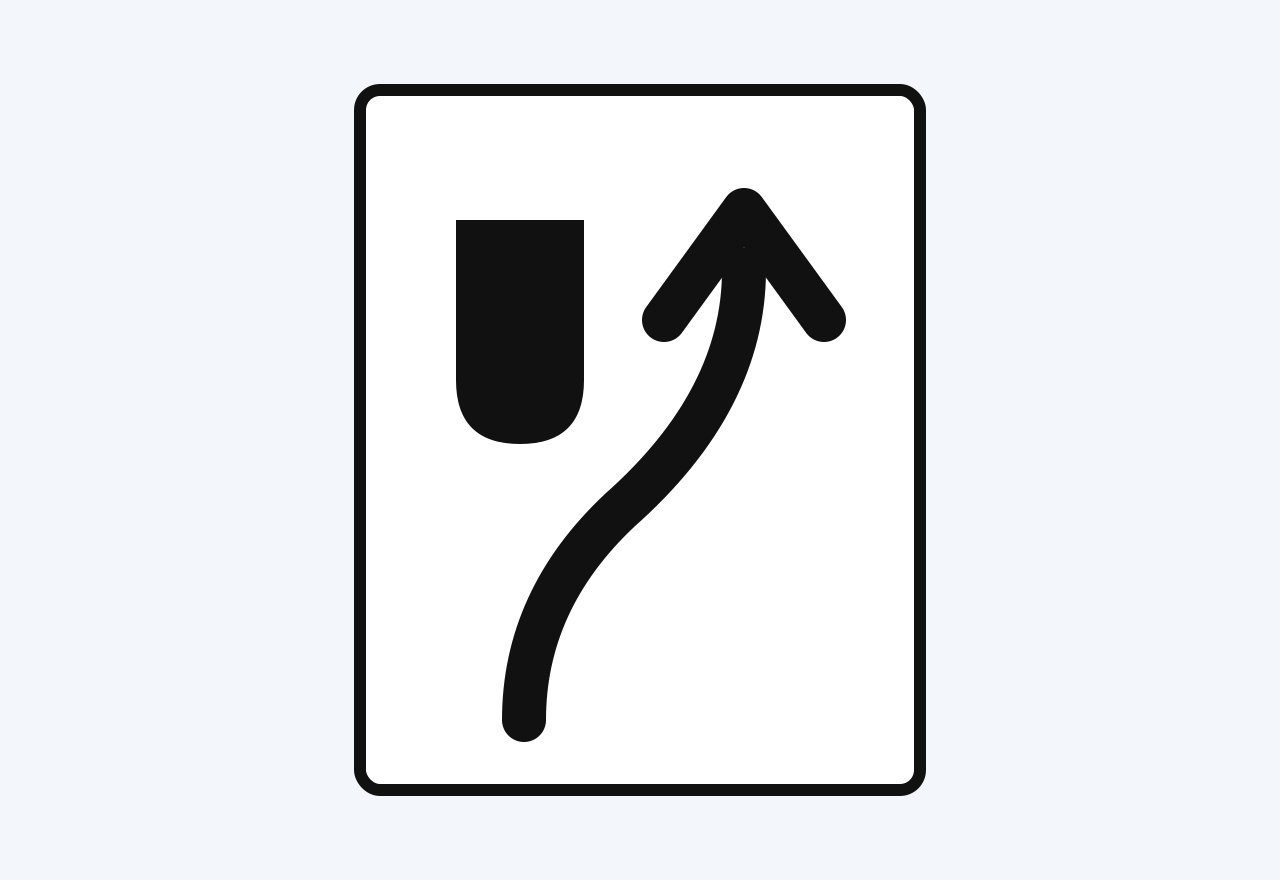
What does this sign direct you to do?
- A. Turn right at the next intersection
- B. Merge into the right lane because the left lane ends
- C. Keep to the right of the island or obstruction ahead
- D. Keep to the left of the island or obstruction ahead
Show answer
Answer: C. Keep to the right of the island or obstruction ahead
This keep-right sign shows traffic passing to the right of a median or obstruction.
Question 8 · Signs and Signals
Unless other times are posted, when do playground zone restrictions apply?
- A. On weekends only, from sunrise until sunset
- B. Every day from 8:30 a.m. to one hour after sunset
- C. On school days only, from 8:00 a.m. to 4:30 p.m.
- D. Every day of the week from 7:00 a.m. to 7:00 p.m.
Show answer
Answer: B. Every day from 8:30 a.m. to one hour after sunset
Playground zones apply every day, not just school days, from 8:30 a.m. to one hour after sunset.
Question 9 · Signs and Signals
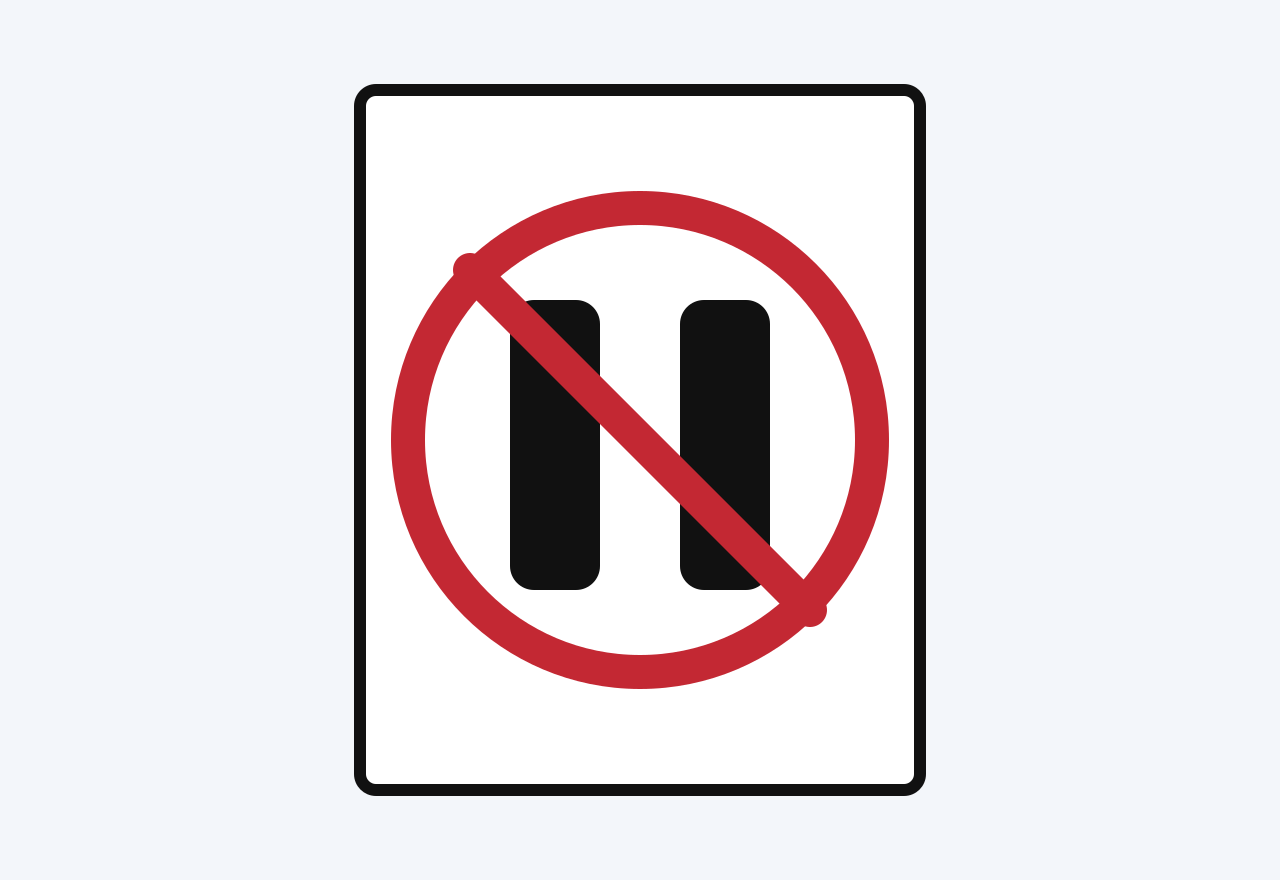
What does this sign mean?
- A. Two-way traffic ahead
- B. The road narrows to one lane
- C. Keep two car lengths apart
- D. Passing is not allowed
Show answer
Answer: D. Passing is not allowed
This sign prohibits passing. Stay in your lane until the restriction ends.
Question 10 · Signs and Signals
A delivery van is going 20 km/h in an active school zone. You are behind it. What may you do?
- A. Pass on the right if there is enough room
- B. Stay behind it while the zone is in effect
- C. Pass on the left if the other lane is clear
- D. Pass, as long as you stay under 30 km/h
Show answer
Answer: B. Stay behind it while the zone is in effect
You may not pass a vehicle going the same direction in an active school or playground zone.
Question 11 · Signs and Signals
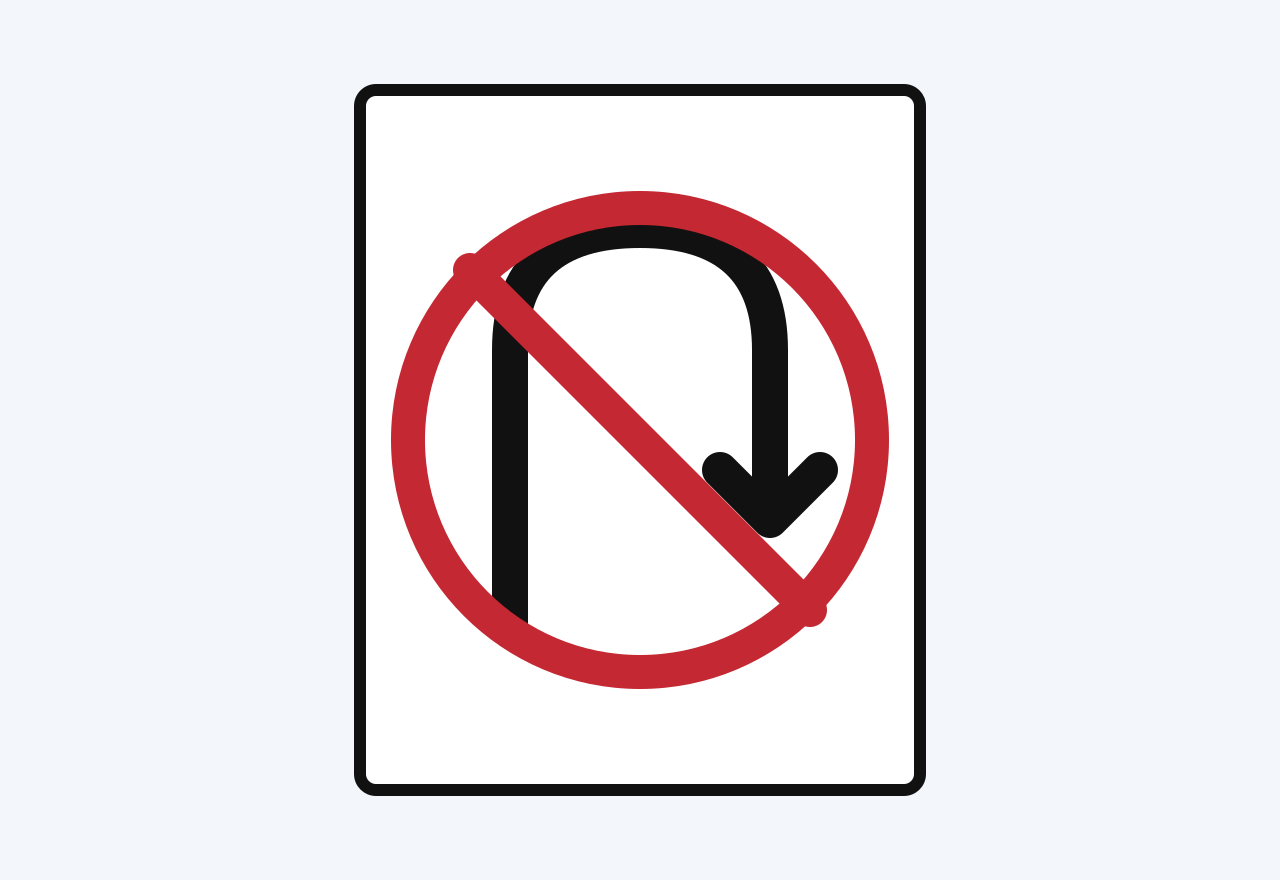
What does this sign prohibit?
- A. Changing lanes at the intersection
- B. Turning around in a U-turn
- C. Turning right onto the cross street
- D. Turning left at the intersection
Show answer
Answer: B. Turning around in a U-turn
The curved arrow with a red slash means no U-turns at this location.
Question 12 · Signs and Signals
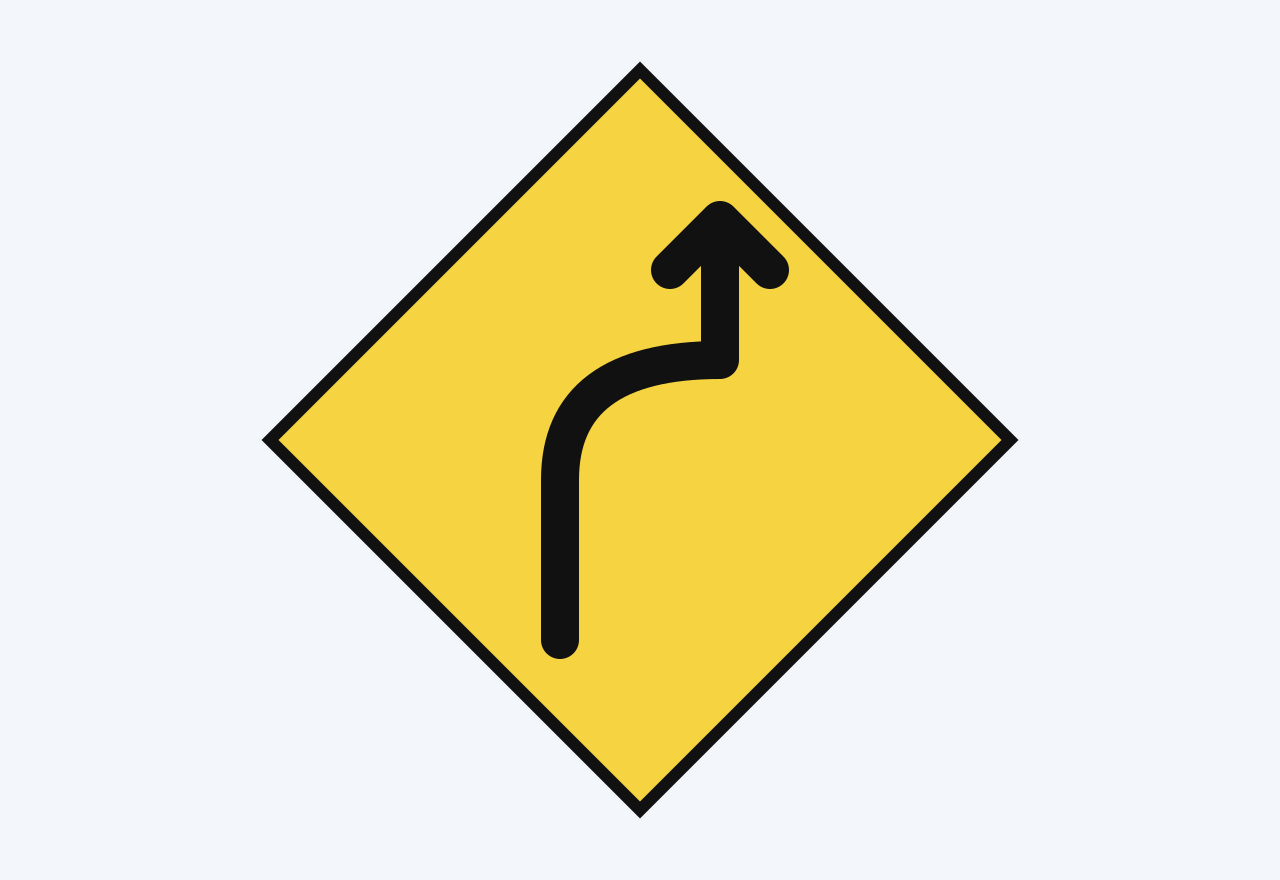
What does this sign warn you about?
- A. A right turn is required ahead
- B. A curve to the right is ahead
- C. A road enters from the right
- D. The right lane ends ahead
Show answer
Answer: B. A curve to the right is ahead
The bent arrow warns of a curve. Slow down before you reach it.
Question 13 · Signs and Signals
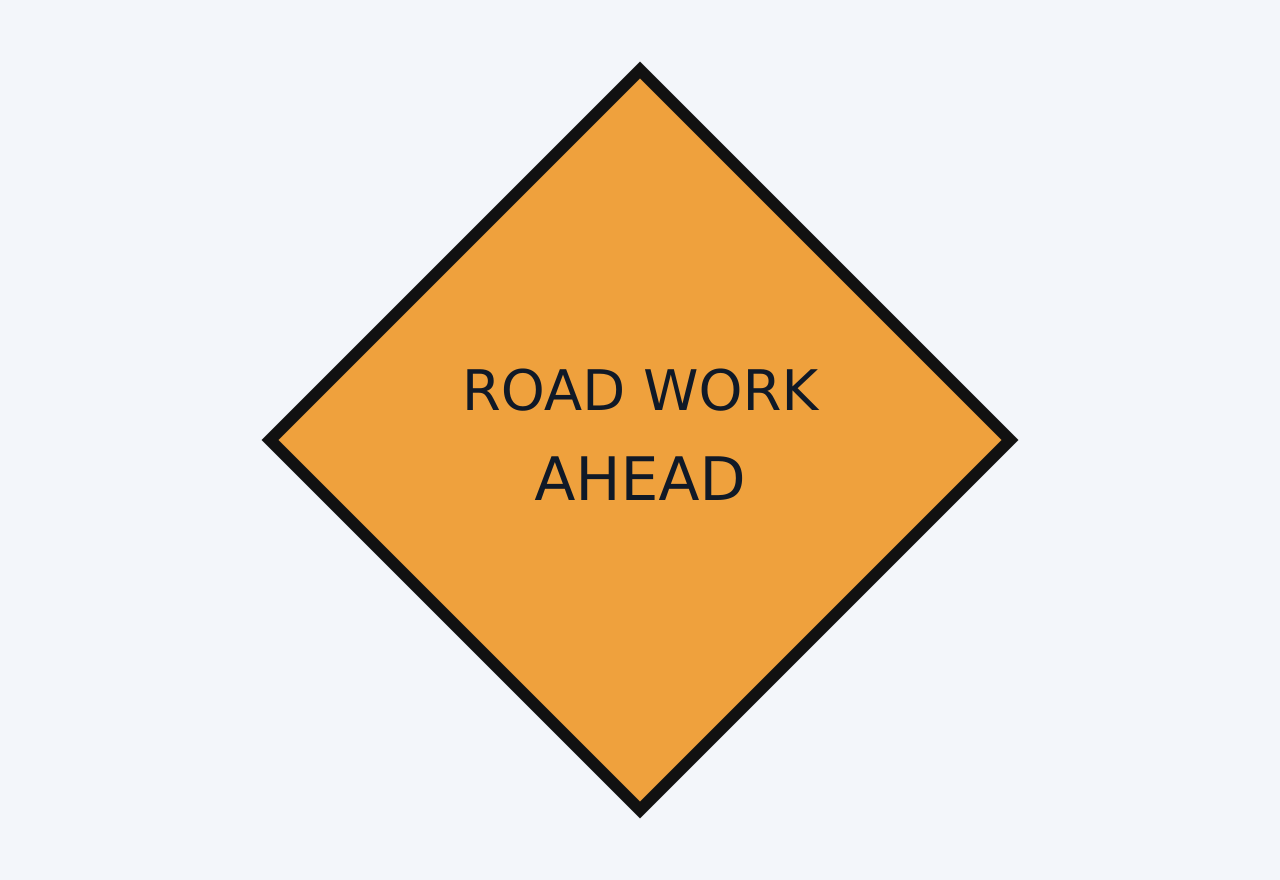
What does this sign tell you?
- A. Construction or maintenance work is ahead
- B. The road ahead is closed to all traffic
- C. A railway crossing is ahead
- D. A detour starts here, so you must turn
Show answer
Answer: A. Construction or maintenance work is ahead
Orange signs mark temporary conditions like road work. Expect lane changes, workers and equipment.
Question 14 · Signs and Signals
The light turns yellow as you approach. You can stop safely before the line. What should you do?
- A. Stop before the line
- B. Continue at the same speed
- C. Stop in the intersection
- D. Speed up to get through
Show answer
Answer: A. Stop before the line
A yellow light means stop if you can do so safely.
Question 15 · Signs and Signals
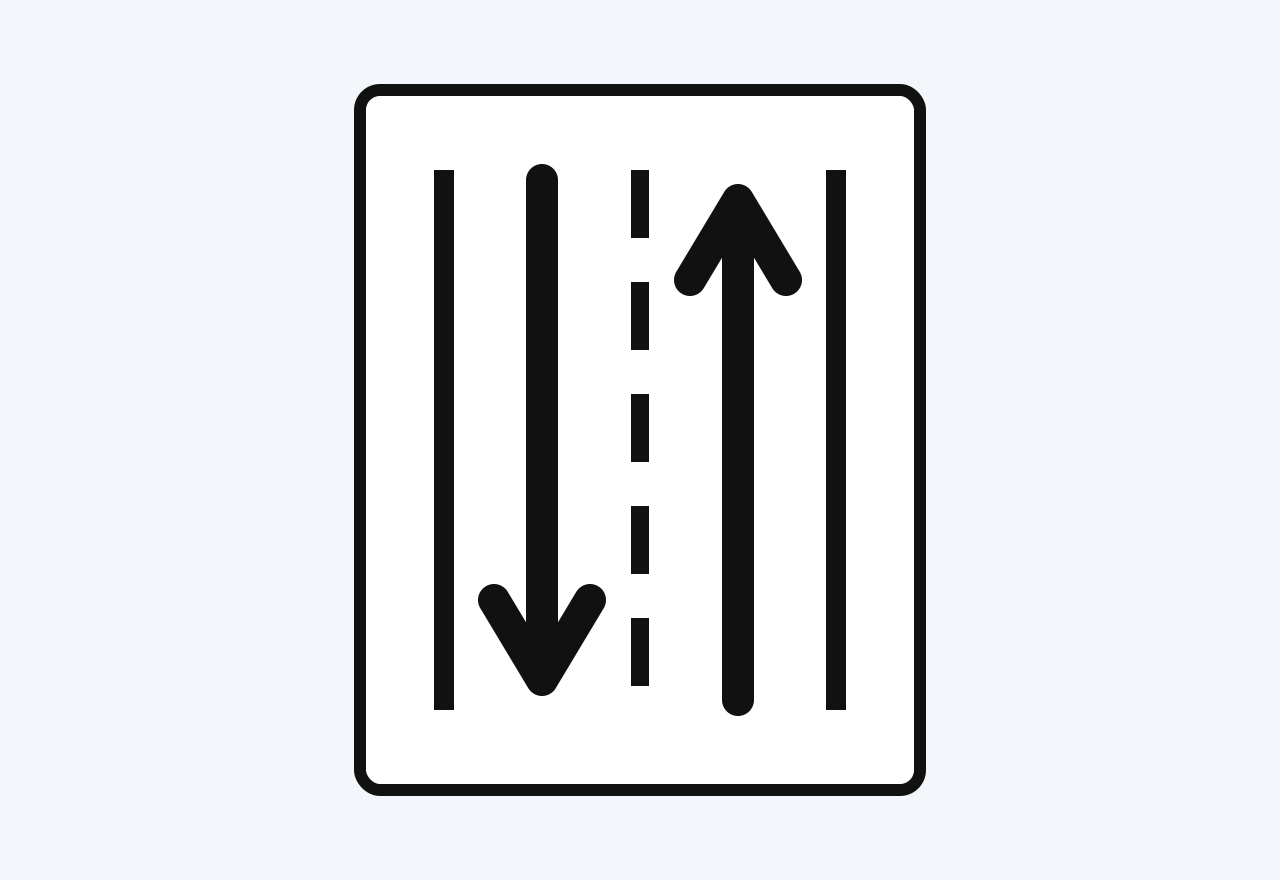
What does this sign tell you?
- A. You may pass on either side of the vehicle ahead
- B. The road divides into two separate roadways
- C. Two lanes ahead travel the same direction as you
- D. Traffic travels in both directions on this road
Show answer
Answer: D. Traffic travels in both directions on this road
The opposing arrows show two-way traffic. Expect vehicles coming toward you.
Question 16 · Signs and Signals
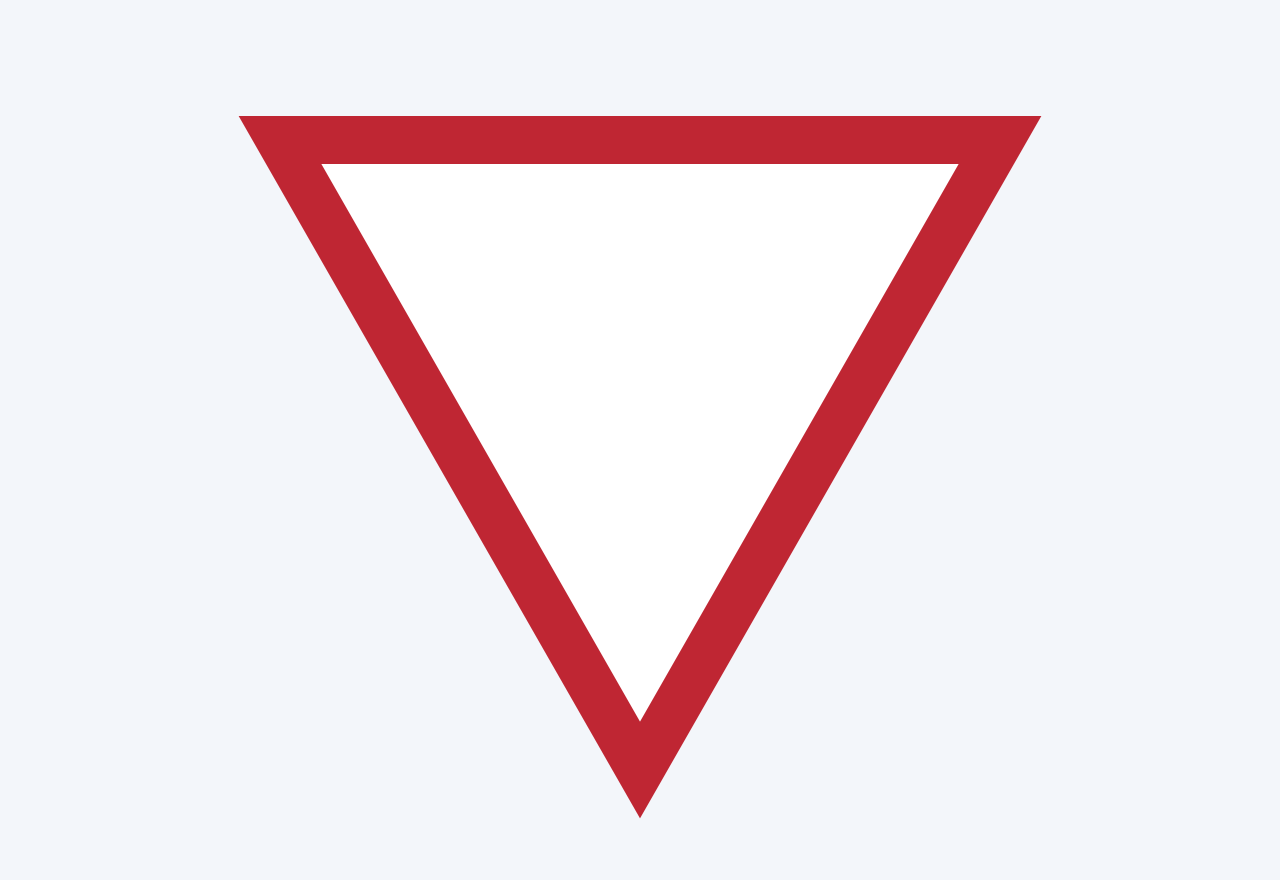
What does this sign require you to do?
- A. Always come to a full stop, even when the road is clear
- B. Slow down only when a vehicle is directly beside you
- C. Merge at your current speed; other traffic must make room
- D. Let traffic and pedestrians go first, stopping if needed
Show answer
Answer: D. Let traffic and pedestrians go first, stopping if needed
This sign means yield. Slow down and give the right of way. Stop only if traffic or pedestrians make it necessary.
Question 17 · Signs and Signals
The posted limit is 100 km/h, but heavy rain makes it hard to see. What speed should you drive?
- A. 100 km/h, since that is still the legal limit even in heavy rain
- B. Faster than traffic, to get out of the rain
- C. The same speed as the car ahead, whatever it is
- D. Slower than 100 km/h, at a speed that lets you stop for what you can see
Show answer
Answer: D. Slower than 100 km/h, at a speed that lets you stop for what you can see
Posted limits are for ideal conditions. Slow down when weather or visibility is poor.
Question 18 · Signs and Signals
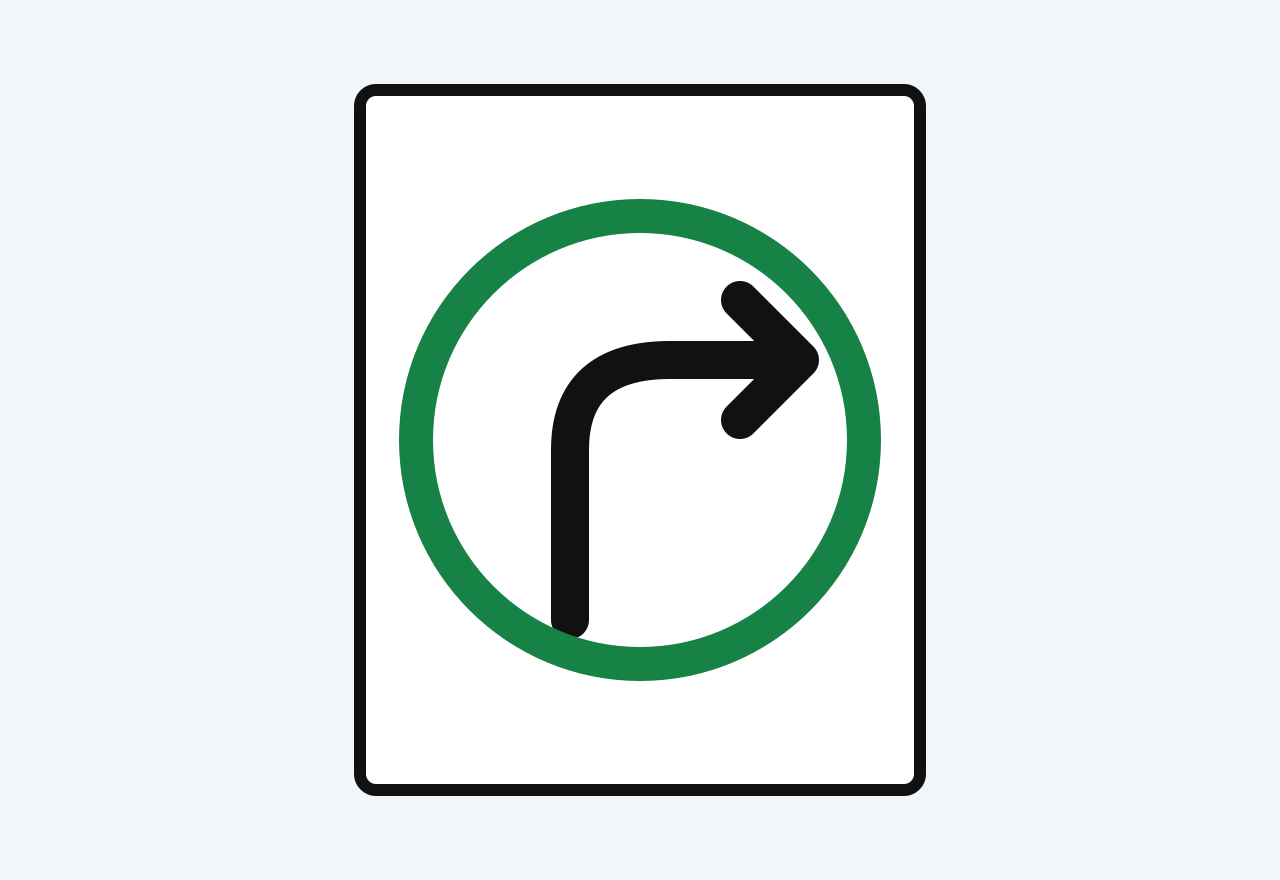
What does this sign mean?
- A. Right turns are not allowed here
- B. You must turn right; going straight is not allowed
- C. Right turns are allowed only on red
- D. The right-turn movement shown is allowed
Show answer
Answer: D. The right-turn movement shown is allowed
A green circle around an arrow shows a permitted movement.
Question 19 · Signs and Signals
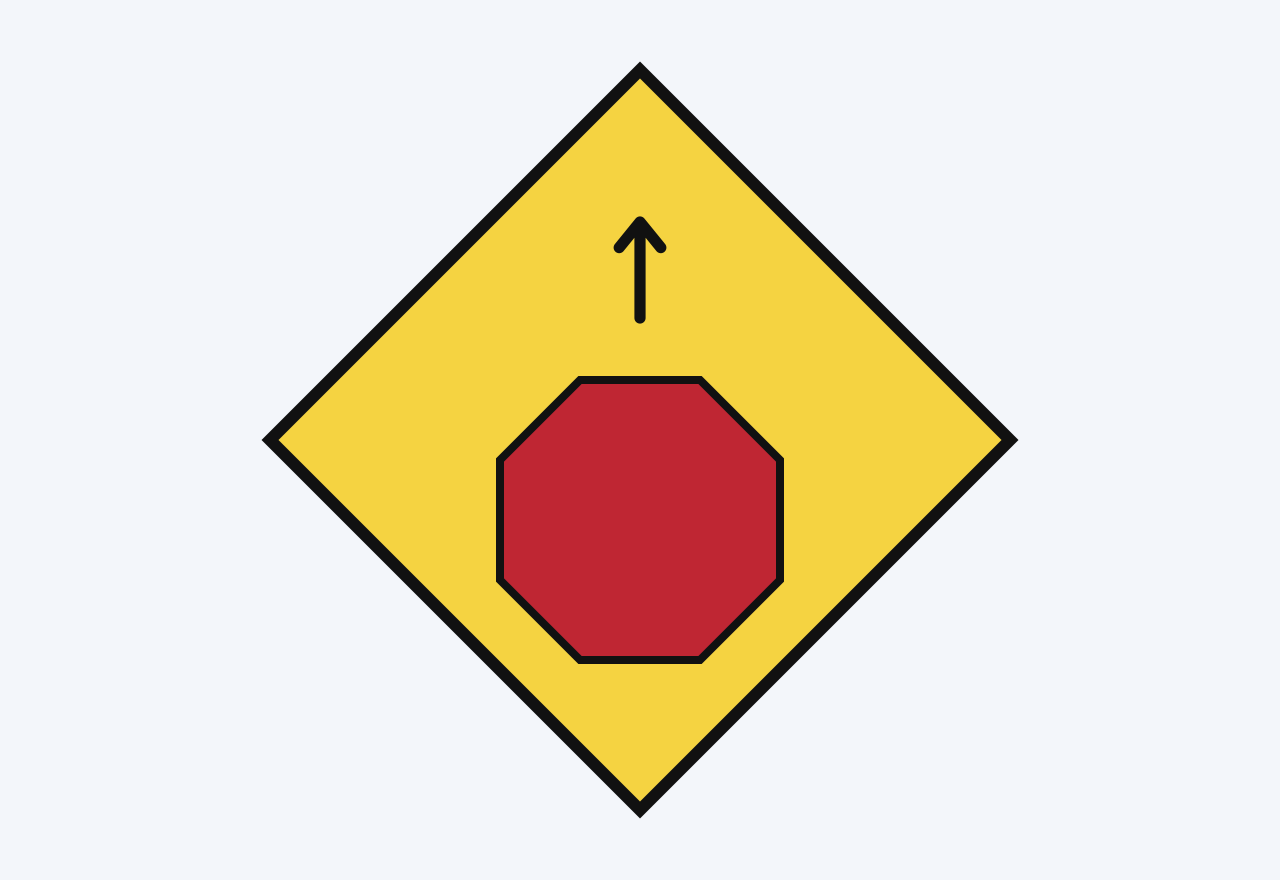
What does this sign warn you about?
- A. A stop sign is ahead
- B. The road ahead is closed
- C. You must stop right here at this sign
- D. A traffic light is ahead
Show answer
Answer: A. A stop sign is ahead
This sign warns of a stop sign ahead, often where it is hard to see. Get ready to stop.
Question 20 · Signs and Signals
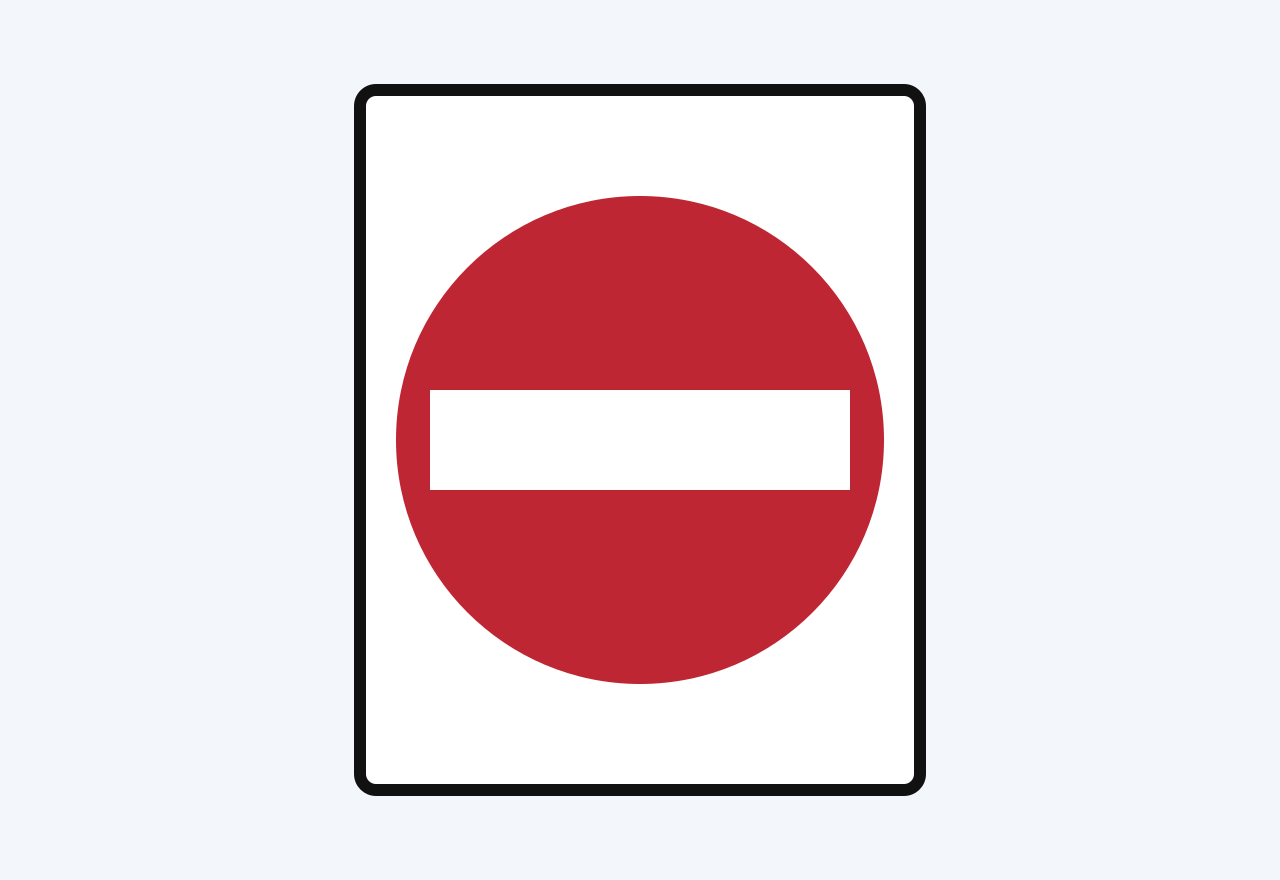
You are about to turn into a street with this sign facing you. What does it tell you?
- A. Stop before entering and yield to cross traffic
- B. Only local traffic may enter the road here
- C. Do not enter the road from this direction
- D. Enter slowly because the road narrows ahead
Show answer
Answer: C. Do not enter the road from this direction
This sign prohibits entry from your direction, usually because traffic on that road flows toward you.
Ready to test yourself?
Take a 30-question practice exam with the answers hidden. You get a score (pass with 25 of 30, like the real test) and an explanation for every answer. For the real test, see about the Class 7 knowledge test.
More free practice and lessons
- Free Alberta Class 7 practice test
- Rules of the road practice test
- Alberta Class 7 Practice Mock Exam 1 with answers
- Alberta Class 7 Practice Mock Exam 2 with answers
- Alberta Class 7 Practice Mock Exam 3 with answers
- Alberta Class 7 Practice Mock Exam 4 with answers
- Alberta Class 7 Practice Mock Exam 5 with answers
- Alberta Class 7 Practice Mock Exam 6 with answers
- Alberta Class 7 Practice Mock Exam 7 with answers
- Reading signs by shape and colour
- Traffic lights and turns on red
- School and playground zones
- Right-of-way at stops and uncontrolled intersections
- Traffic circles and roundabouts
- Parking on hills
- Where you can't park
- Space, scanning and following distance
- Distraction and impairment
- Merging, exiting and passing
- Lane markings and passing
- School buses and emergency vehicles
- Roadside workers, tow trucks and snowplows
- Cyclists, motorcycles and large trucks
- Night, weather and slippery roads
- Skids, blowouts and stalls
- Class 7 learner's licence rules
- Before you drive
- Reading the diagrams
- About the Alberta Class 7 knowledge test
- 7-day study plan
- Study tips