By the ChowChow Labs editorial team · Updated November 13, 2026 · How we check our content
Short answer: Diagram questions show a simple road layout with lettered vehicles. Read the question text first: it states every control and condition that matters.
Key points
- A is usually you. Other vehicles are B, Q or E; pedestrians are P.
- Arrows show the direction each road user is travelling.
- Signs, lights and notes in the diagram are part of the question.
- If the text and picture seem to disagree, the written scenario is the one to follow, and please report it.
Law or advice?
Diagrams are study aids. The legal rule is the one explained in the answer.
Example
In a diagram, A is northbound and B is coming from the right at an intersection with no signs. A yields to B.
Checked against the Government of Alberta Driver’s Guide (Spring 2026), used under the Open Government Licence – Alberta. Laws change, so check alberta.ca for the current rules before you rely on a number. Sources: Alberta Driver’s Guide, page 59: Intersections.
Check yourself
Try these 6 questions from our free mock exams, then tap Show answer. For more, take the rules of the road practice test.
Question 1 · Road Scenarios
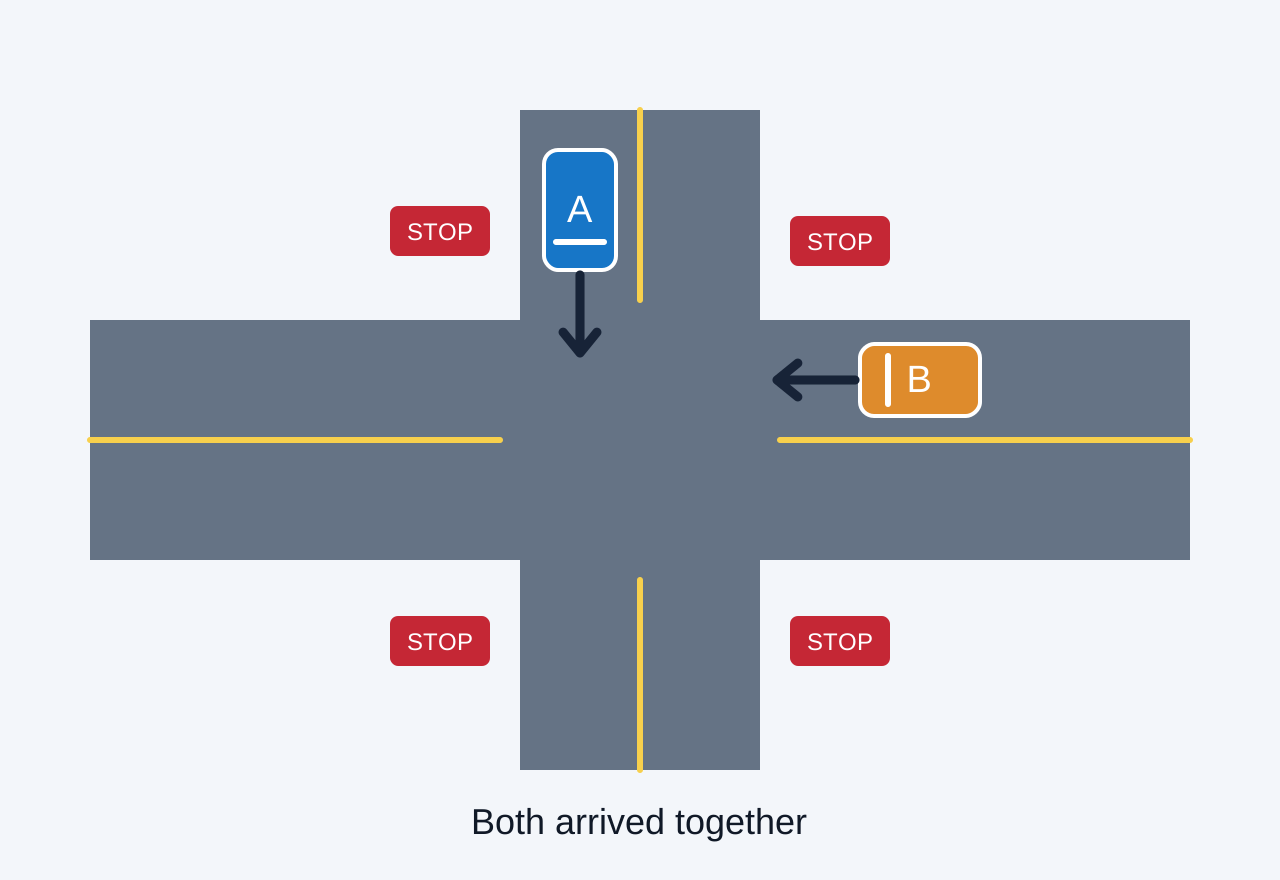
A and B stop at an all-way stop at the same time. A is on B's right. Who normally goes first?
- A. Whichever driver starts moving first
- B. Whichever driver has the larger vehicle
- C. B, because B is on A's left
- D. A, because A is on B's right
Show answer
Answer: D. A, because A is on B's right
When two drivers arrive at an all-way stop together, the driver on the right usually goes first. Neither should move unless it is safe.
Question 2 · Road Scenarios
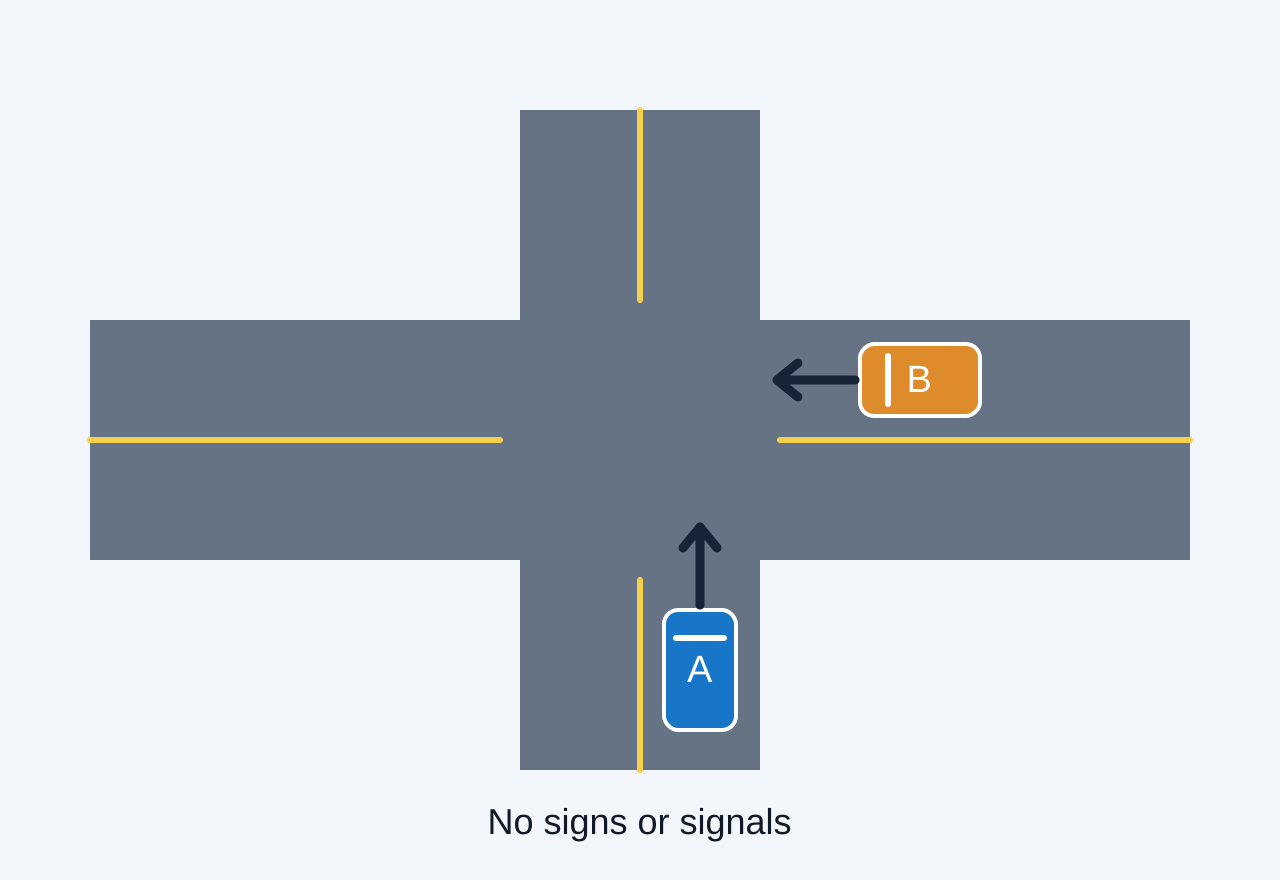
At an intersection with no signs or signals, B is approaching on A's right. What should A do?
- A. Go first if A's road looks wider
- B. Yield to B and cross only when it is safe
- C. Speed up so B has to slow down
- D. Go first, because A is travelling straight
Show answer
Answer: B. Yield to B and cross only when it is safe
At an intersection with no signs or signals, you must yield to a vehicle approaching from your right.
Question 3 · Road Scenarios
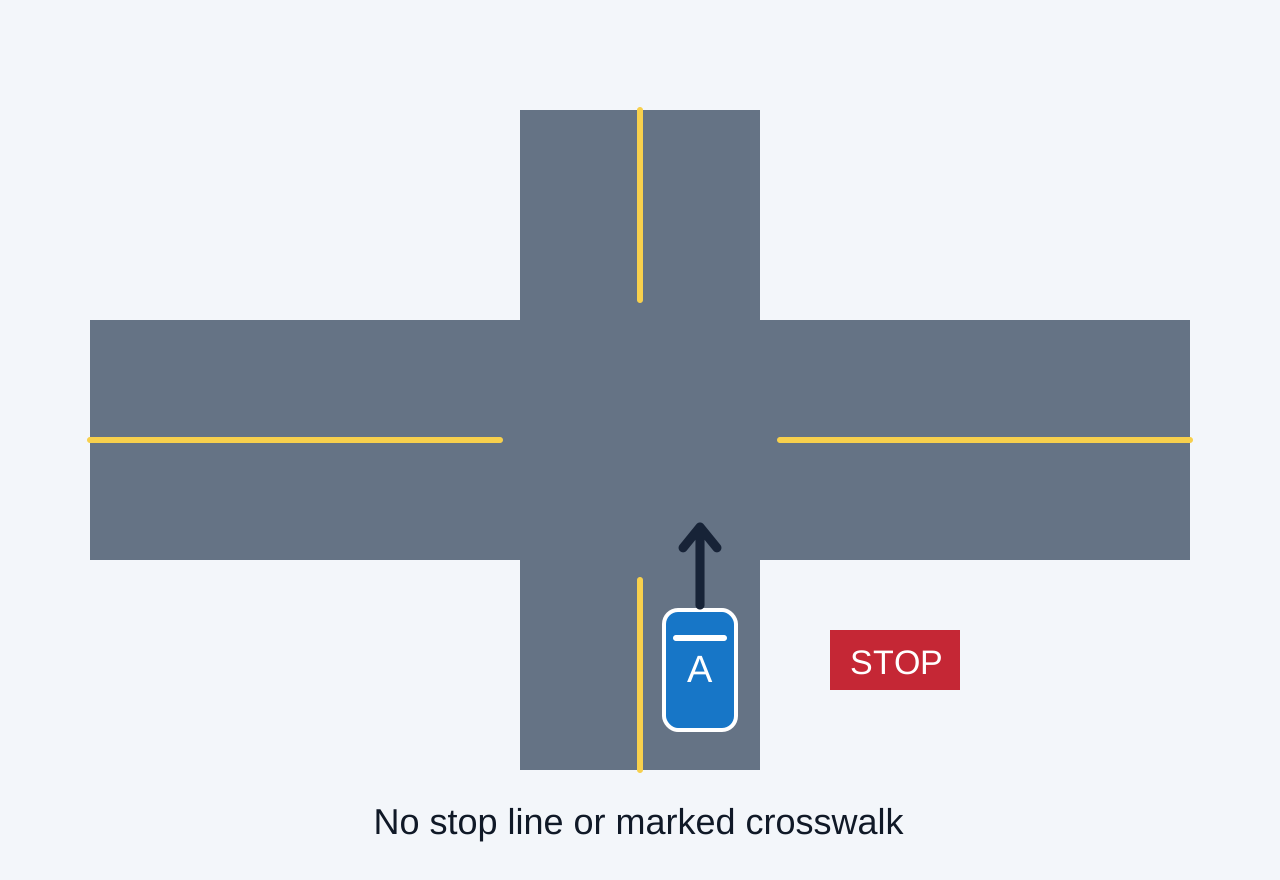
A faces a stop sign with no stop line or marked crosswalk. Where should A stop?
- A. Before entering the intersection, clear of where people cross
- B. Halfway onto the crossing path to look
- C. In the middle of the intersection, where the view is better
- D. Past the edge of the cross street
Show answer
Answer: A. Before entering the intersection, clear of where people cross
With no stop line or crosswalk, stop before the intersection, leaving room for pedestrians who may cross there.
Question 4 · Road Scenarios
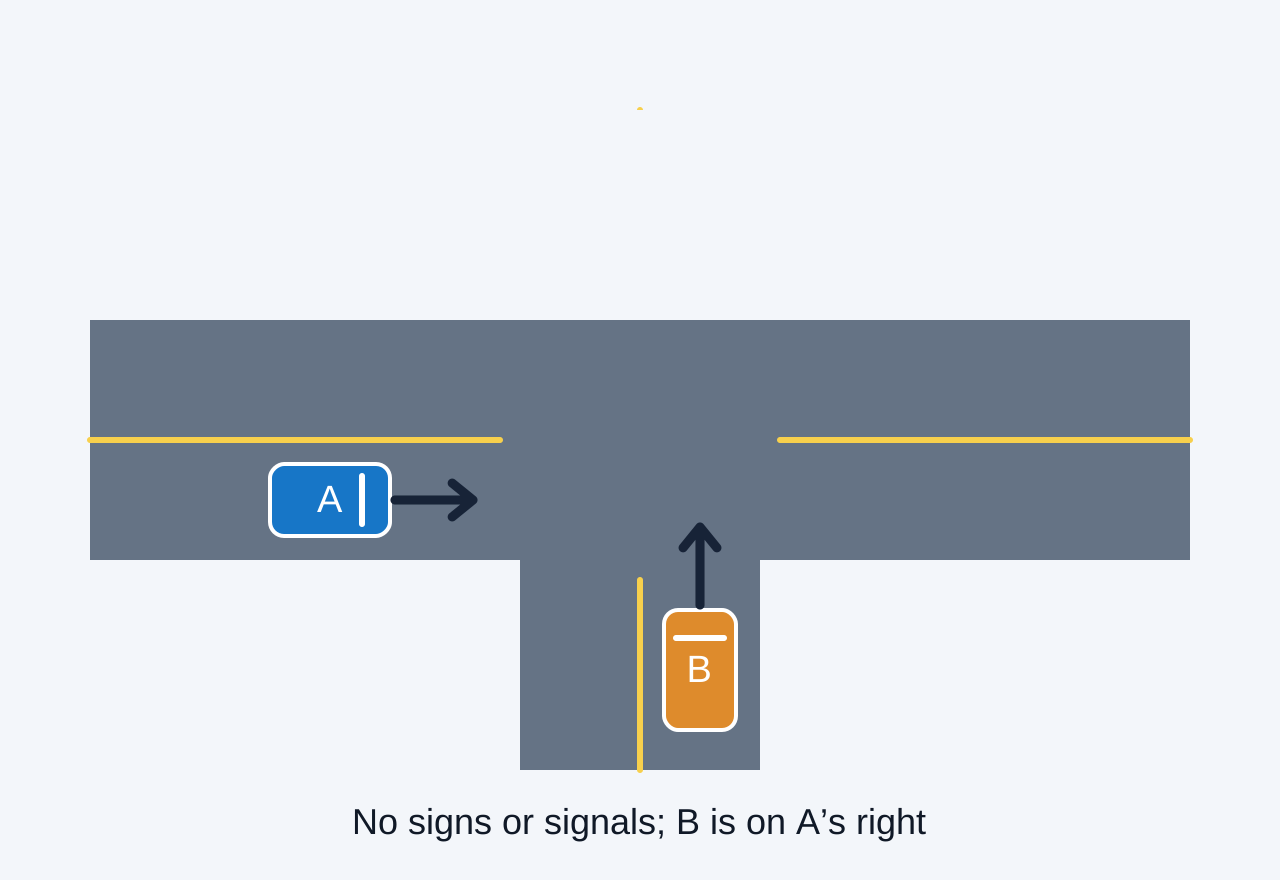
At an uncontrolled T intersection, B is on the stem, on A's right, and their paths conflict. Who should yield?
- A. B, because B's road ends
- B. A, because B is on A's right
- C. A and B both stop and negotiate
- D. Whoever is going faster
Show answer
Answer: B. A, because B is on A's right
At an uncontrolled T intersection, the driver on the right has the right-of-way, even on the road that ends.
Question 5 · Road Scenarios
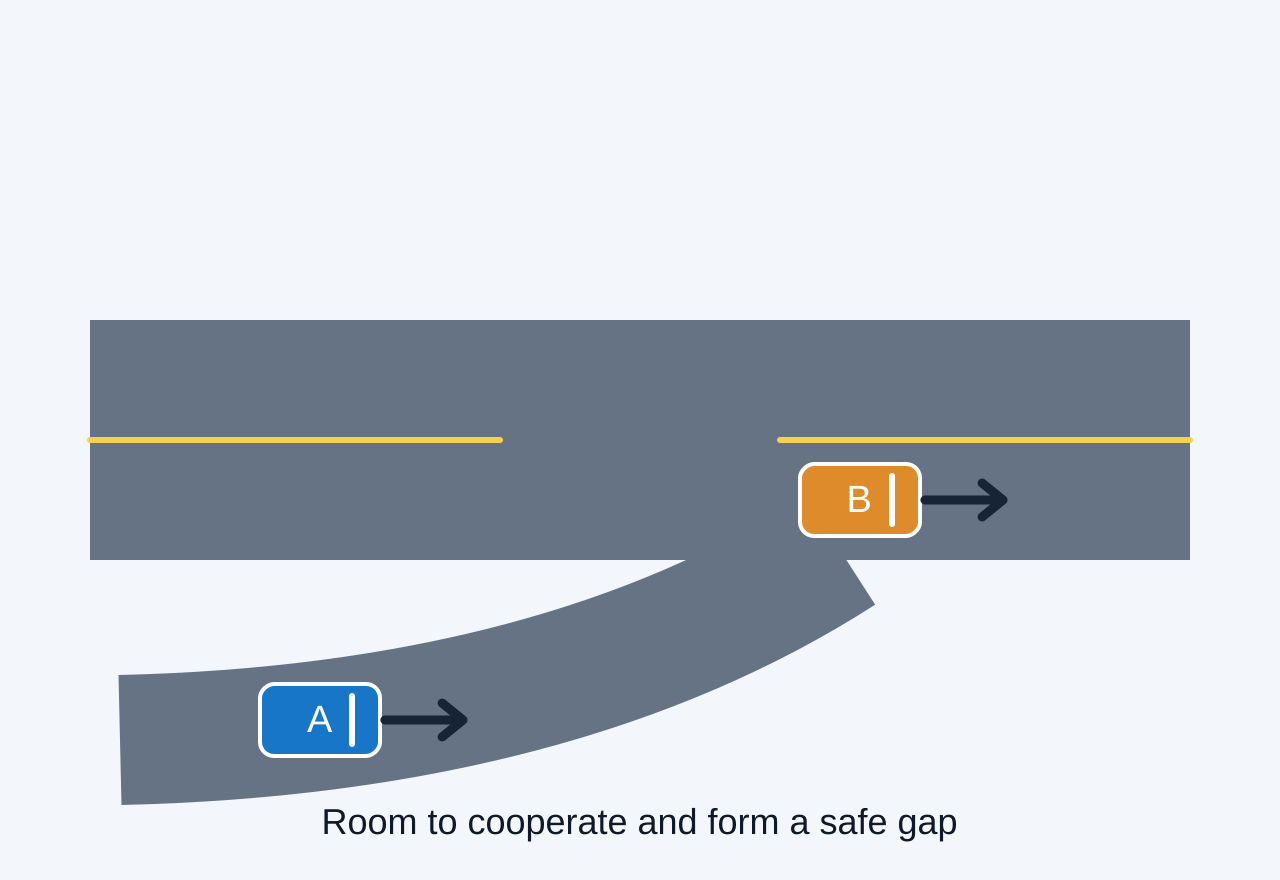
A is merging onto a highway from an acceleration lane. B is on the main road. What is correct?
- A. A and B share responsibility for a safe merge
- B. A has priority because A is merging
- C. B must always stop to let A in
- D. A must always stop at the end of the ramp
Show answer
Answer: A. A and B share responsibility for a safe merge
Alberta describes ordinary merging as a shared responsibility. Neither driver has automatic priority.
Question 6 · Road Scenarios
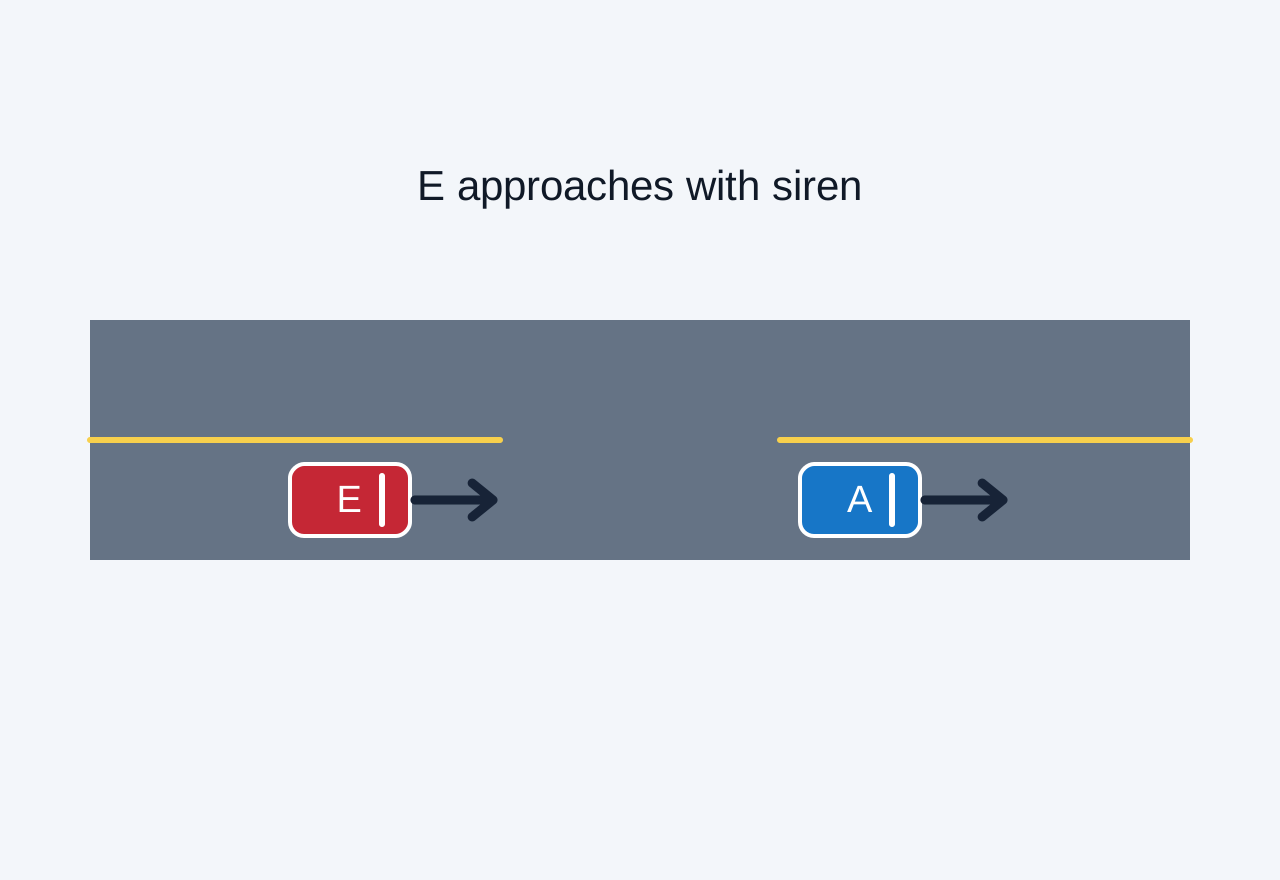
Emergency vehicle E comes up behind A with its siren on. The right edge is clear. What should A do?
- A. Stop right where A is in the lane
- B. Speed up to stay ahead of E
- C. Pull over to the right edge and stop
- D. Move to the left lane so E can pass on the right
Show answer
Answer: C. Pull over to the right edge and stop
On a two-way road, pull over to the right edge and stop to let the emergency vehicle pass.
Next: Reading signs by shape and colour. Sign shape and colour tell you what kind of message is coming before you can read it. Regulatory signs give orders, warning signs describe what's ahead, and temporary orange signs mark work zones.