Alberta Class 7 Practice Mock Exam 7
All 30 questions from Mock Exam 7, with answers and explanations.
A mixed exam: 6 sign questions, 6 road diagrams and 18 questions on the rules of the road, including hazards, safe driving and highways.
These are the 30 questions from Mock Exam 7, original practice questions on signs and the rules of the road, checked against the Alberta Driver’s Guide. Read through them with Show answer, or take the exam online first with the answers hidden and see your score. No sign-in needed.
These are original practice questions, not actual knowledge test questions. Each links to the page of the Alberta Driver’s Guide it’s based on, so you can check the rule. Questions were last reviewed in October 2026; read how we write and check them.
Question 1 · Signs and Signals
Does the no-passing rule in school zones apply outside the zone's hours?
- A. Yes, it applies at all times
- B. Only when a crossing guard is present
- C. Yes, but only on weekends
- D. No, it applies when the zone is in effect
Show answer
Answer: D. No, it applies when the zone is in effect
The no-passing rule applies when the school or playground zone is in effect.
Question 2 · Intersections
You approach an uncontrolled intersection and parked cars block your view to the right. What should you do?
- A. Speed up to get through before anyone arrives
- B. Keep your speed and rely on your horn to warn others
- C. Look to the left only, since that traffic is closest
- D. Slow down enough to stop if traffic comes from the right
Show answer
Answer: D. Slow down enough to stop if traffic comes from the right
Adjust your speed to the visibility so you can yield if needed.
Question 3 · Road Scenarios
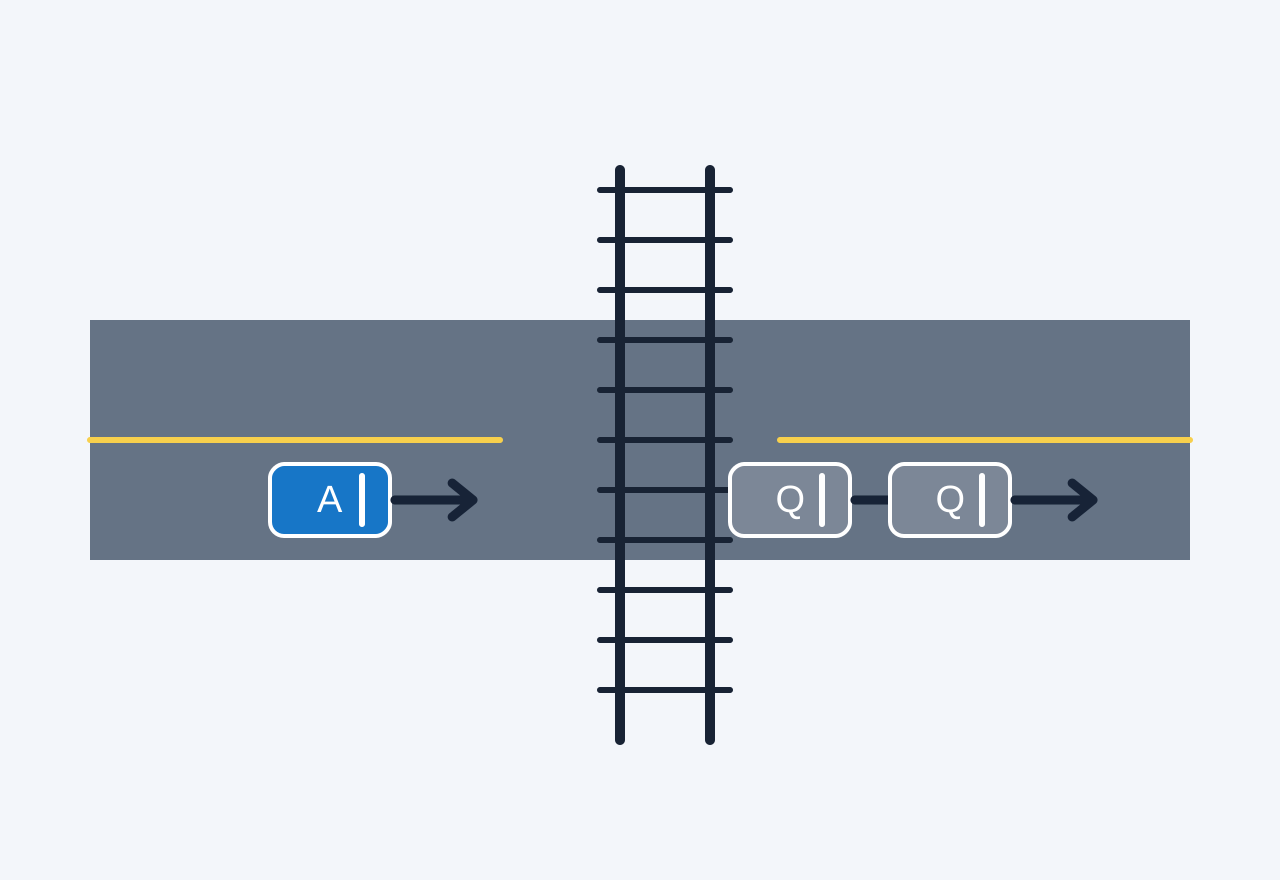
Why is it dangerous for A to stop on the tracks in this scene?
- A. Stopping on the tracks can drain the car's battery
- B. The crossing gates may scratch the car's paint
- C. A train may come and be unable to stop in time
- D. The rails may damage A's tires if it waits there
Show answer
Answer: C. A train may come and be unable to stop in time
Trains need a long distance to stop. A car stuck on the tracks has no way to escape a train.
Question 4 · Signs and Signals
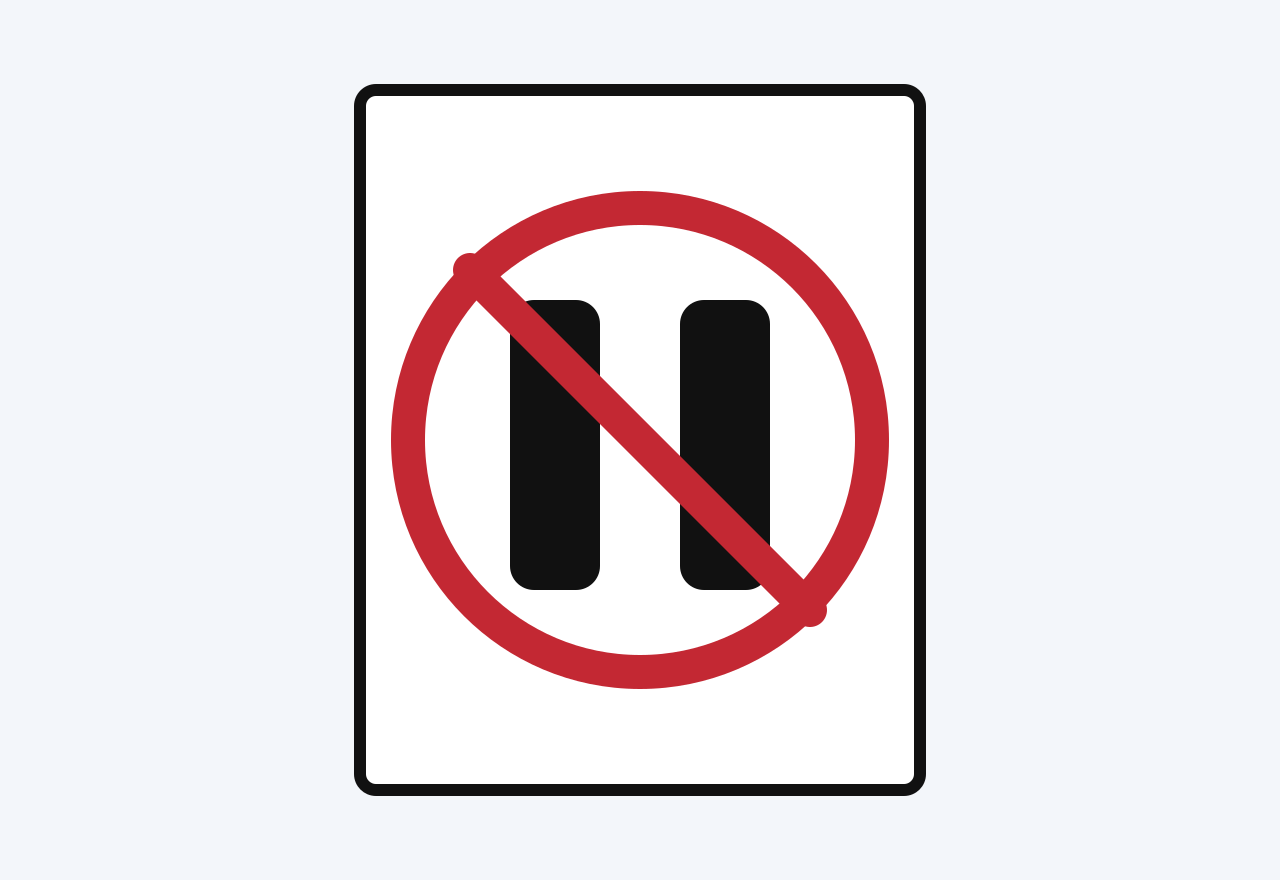
You are behind a slow car in an area with this sign. What should you do?
- A. Pass on the shoulder at a low speed
- B. Follow closely to encourage it to speed up
- C. Stay behind it until passing is allowed and safe
- D. Pass quickly if the oncoming lane looks clear
Show answer
Answer: C. Stay behind it until passing is allowed and safe
No passing means no passing, even when the vehicle ahead is slow. Keep a safe following distance.
Question 5 · Licensing
At what age is parental consent no longer required to apply for a Class 7 licence?
- A. 18
- B. 16
- C. 21
- D. 17
Show answer
Answer: A. 18
Parental consent is required for applicants under 18 years of age.
Question 6 · Highways
What should you do before returning to your lane after passing?
- A. Brake to slow down
- B. Shoulder check right and signal
- C. Honk to warn the car you passed
- D. Look only straight ahead
Show answer
Answer: B. Shoulder check right and signal
Check your blind spot and signal before moving back.
Question 7 · Signs and Signals
The light turns yellow as you reach the stop line at the limit, and stopping hard could cause a crash. What should you do?
- A. Slam on the brakes
- B. Stop in the crosswalk
- C. Continue through carefully
- D. Swerve into another lane
Show answer
Answer: C. Continue through carefully
If you have reached a point where you cannot stop safely, clear the intersection carefully.
Question 8 · Road Scenarios
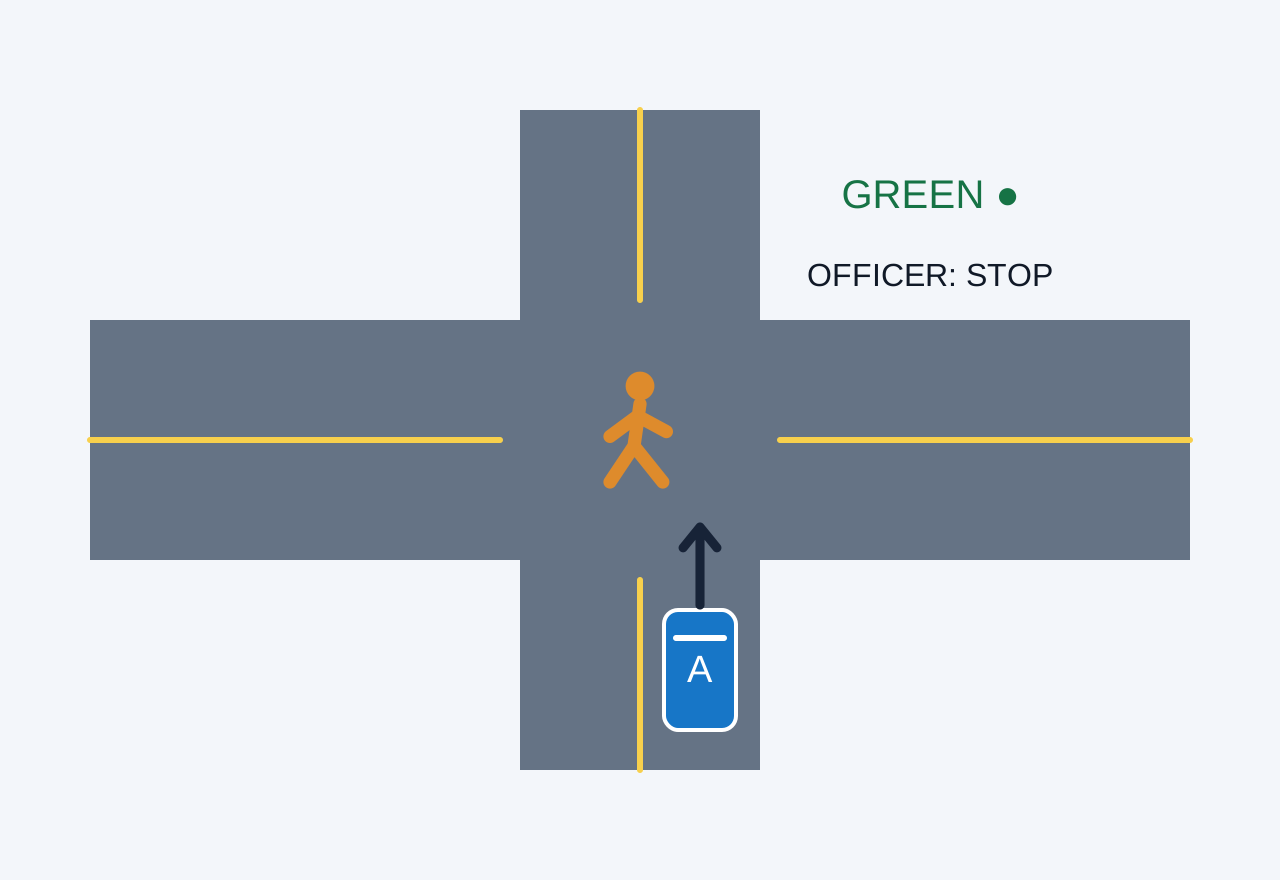
Why might an officer direct traffic against the signal shown in this scene?
- A. To manage an emergency, crash or unusual traffic
- B. Because the officer is fixing the signal
- C. Because traffic lights do not apply at night
- D. Because the officer is testing new drivers
Show answer
Answer: A. To manage an emergency, crash or unusual traffic
Officers step in when conditions need active control, such as crashes, events or emergencies.
Question 9 · Signs and Signals
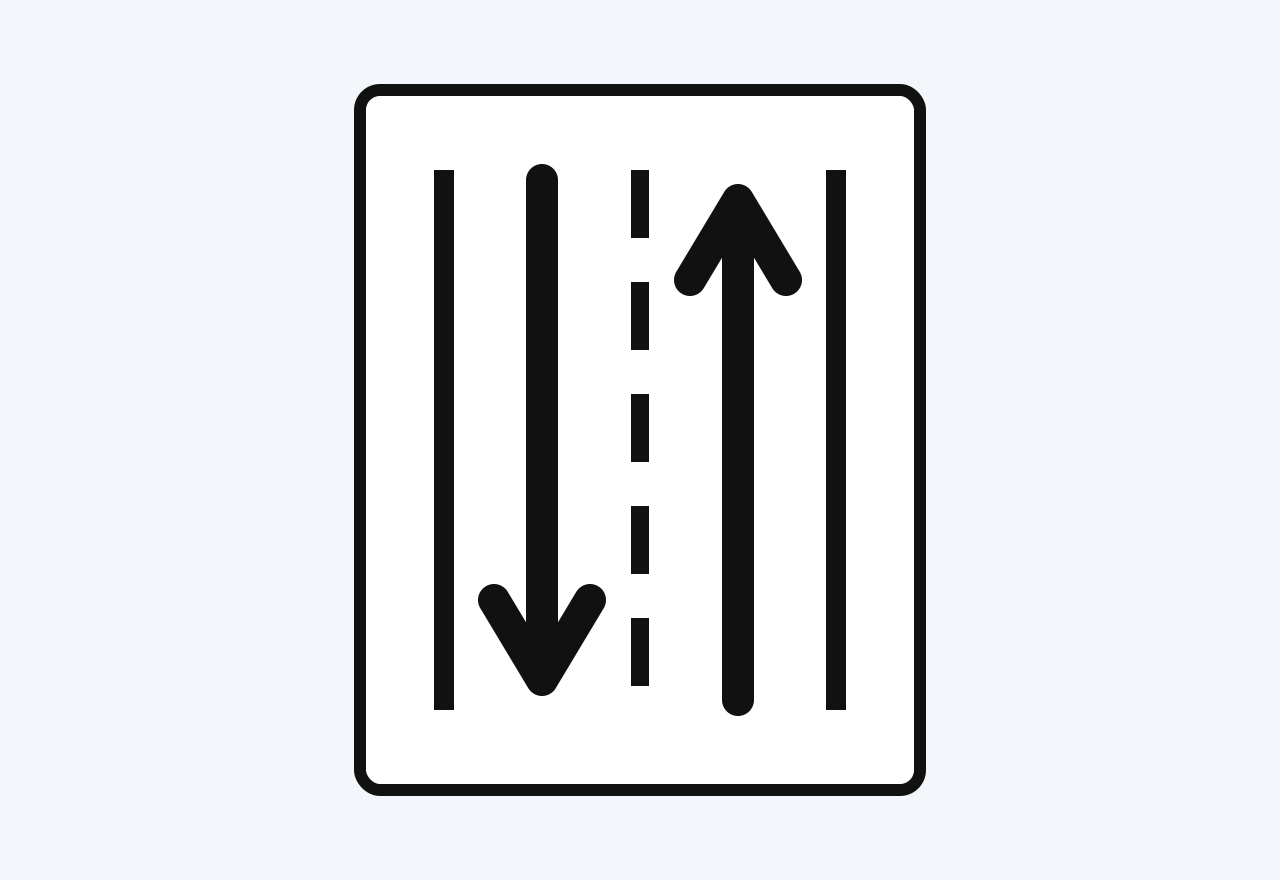
You have been on a one-way road and now see this sign. What change should you expect?
- A. Passing is now allowed in any lane
- B. All lanes still travel in your direction
- C. Oncoming traffic will now share the road
- D. The road ends and you must turn
Show answer
Answer: C. Oncoming traffic will now share the road
This sign often appears where a one-way road or divided highway becomes a two-way road.
Question 10 · Safe Driving
In heavy fog, why should you leave more space ahead?
- A. Other drivers expect you to do it
- B. Driving in fog saves fuel this way
- C. You need more time to react to hazards
- D. Fog makes your brakes work better
Show answer
Answer: C. You need more time to react to hazards
Reduced visibility leaves less warning, so more space gives you time to react.
Question 11 · Signs and Signals
Can you be charged for driving too fast for conditions even if you are under the speed limit?
- A. No, the posted limit is the only speed rule there is
- B. Only if you are driving in a school or playground zone
- C. Yes, you must drive at a speed safe for the conditions
- D. Only if you are also over the limit by 10 km/h
Show answer
Answer: C. Yes, you must drive at a speed safe for the conditions
You must adjust speed to road, traffic and weather conditions, even when under the posted limit.
Question 12 · Signs and Signals
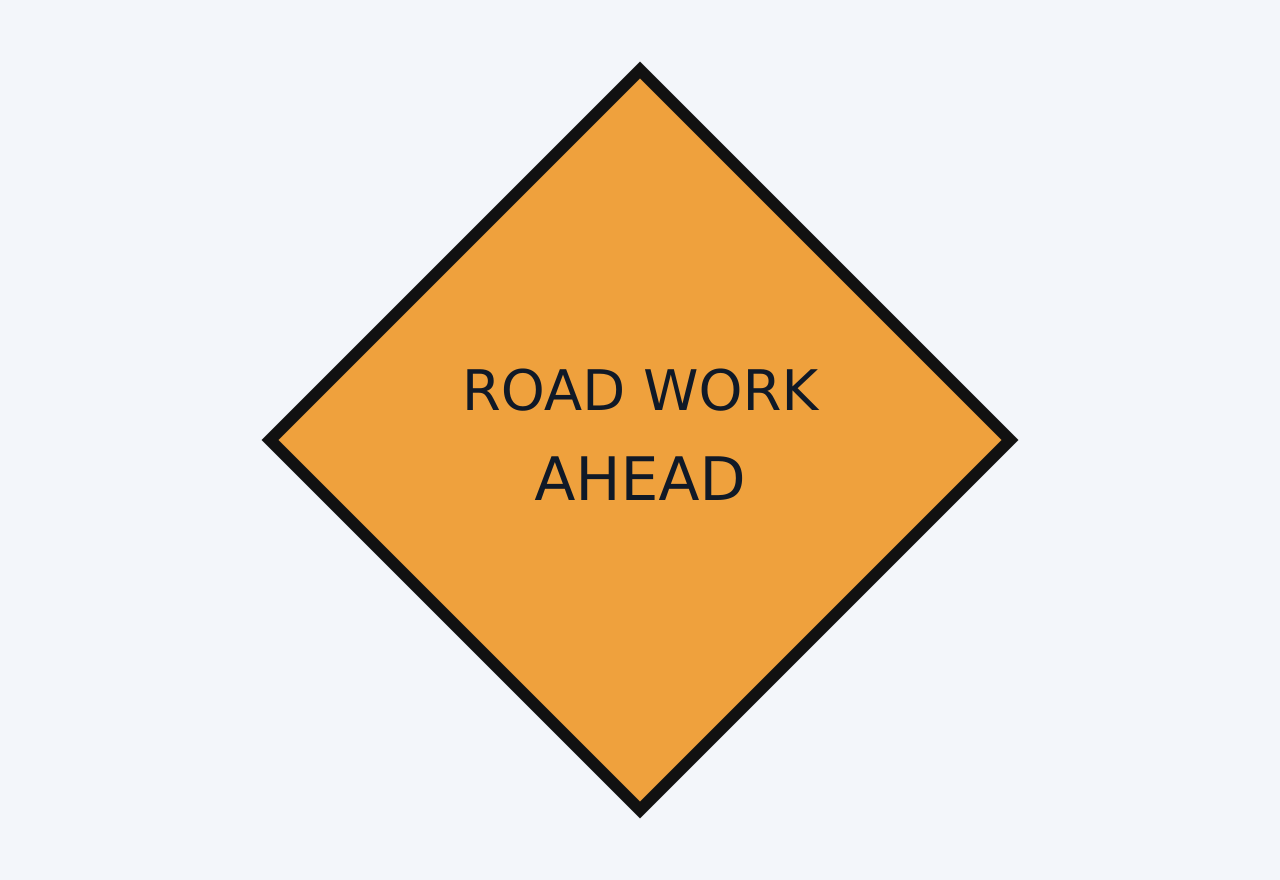
After this sign, a flag person holds up a stop paddle. What must you do?
- A. Stop and wait until the flag person signals you to go
- B. Slow down and steer carefully around the flag person
- C. Stop only if you can see workers on the road surface
- D. Follow the car ahead if it continues through the zone
Show answer
Answer: A. Stop and wait until the flag person signals you to go
A flag person's directions must be obeyed, just like a traffic sign.
Question 13 · Intersections
You are in the outside lane of a two-lane traffic circle and a driver in the inside lane signals to exit. What should you do?
- A. Speed up to block them
- B. Yield to the inside-lane driver
- C. Change lanes to the inside
- D. Keep going; outside lanes have priority
Show answer
Answer: B. Yield to the inside-lane driver
In Alberta, drivers in the right (outside) lane yield to drivers on the left (inside) in the circle.
Question 14 · Hazards
What is hydroplaning?
- A. When the tires get too hot
- B. When tires ride on water and lose contact with the road
- C. When the car slides on ice
- D. When the brakes fail after driving through deep water
Show answer
Answer: B. When tires ride on water and lose contact with the road
Water on the road can cause tires to lose grip.
Question 15 · Road Scenarios
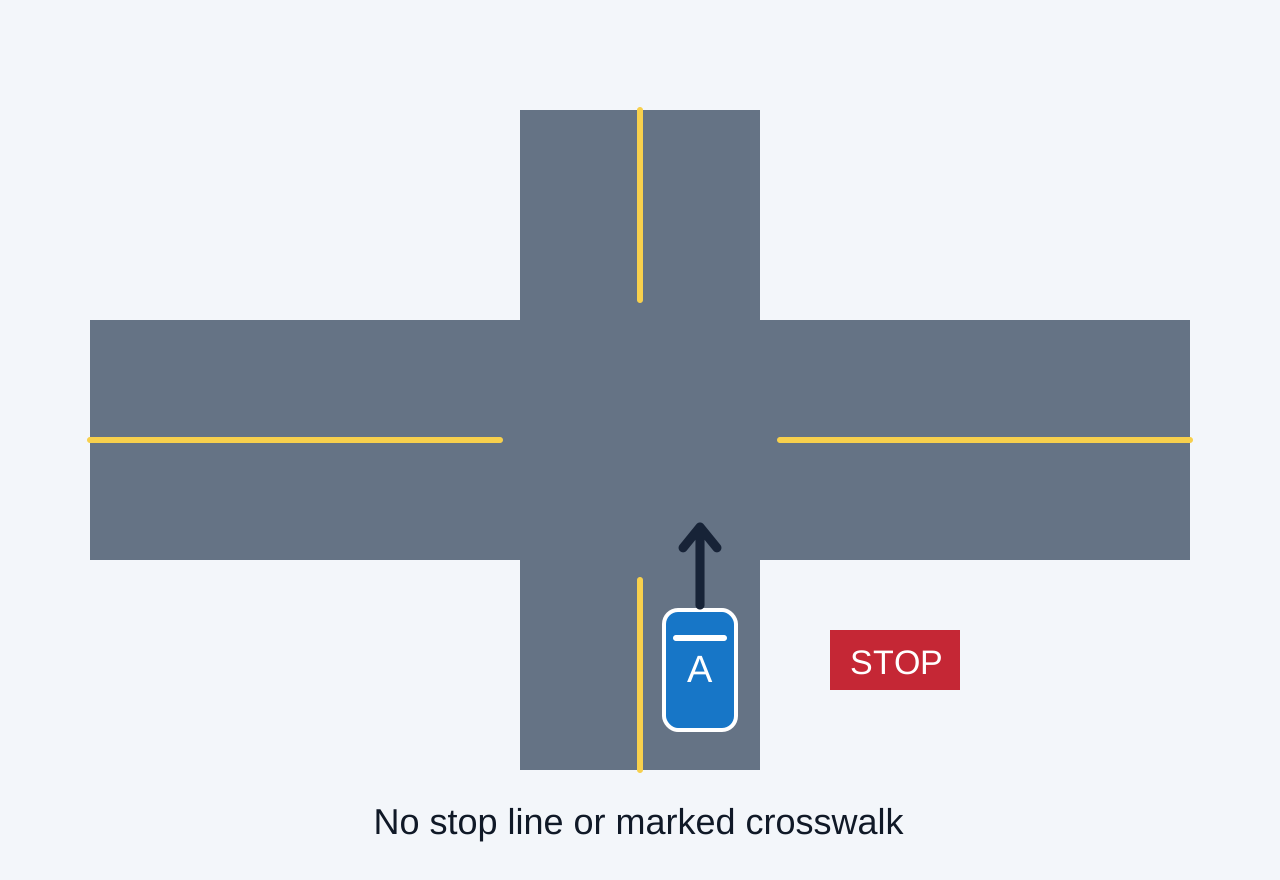
There is no painted crosswalk at this corner. Which statement is accurate?
- A. An unmarked crosswalk can still exist at the intersection
- B. Pedestrians may not cross where there is no paint on the road
- C. Drivers never need to yield at unmarked corners
- D. Only painted crosswalks count as legal crossings
Show answer
Answer: A. An unmarked crosswalk can still exist at the intersection
Crosswalks can be unmarked. Drivers must still watch for and yield to pedestrians there.
Question 16 · Road Scenarios
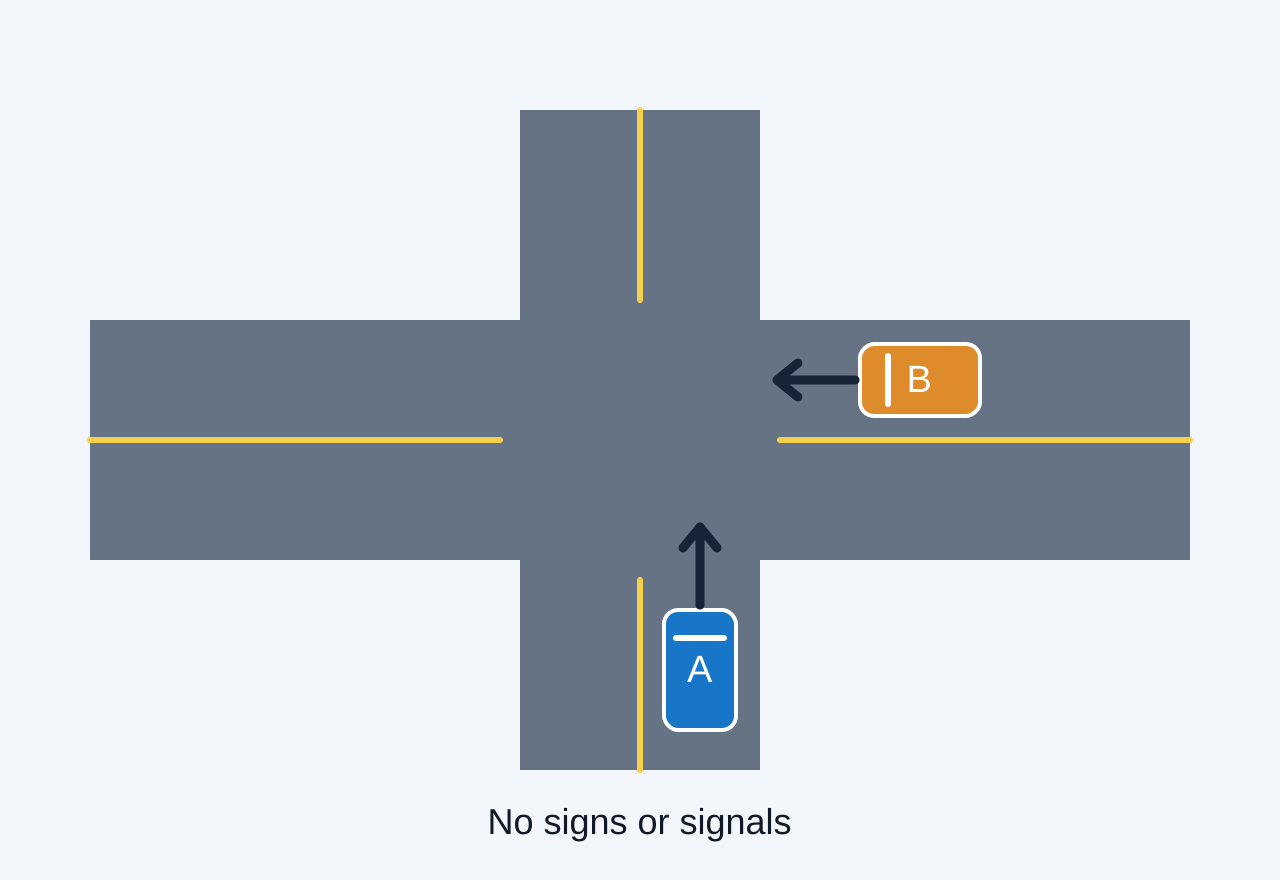
At this uncontrolled intersection, B is on A's right. What may B expect if A follows the rules?
- A. A has priority because it is northbound
- B. Both must stop and wave each other through
- C. B must stop completely before entering
- D. A will give way to B
Show answer
Answer: D. A will give way to B
B is on A's right, so B has the right-of-way. B should still watch in case A does not yield.
Question 17 · Sharing the Road
Why are motorcycles harder to see?
- A. Their small size makes them easy to miss
- B. They always ride at night
- C. They are not required to have lights
- D. They always ride on the shoulder
Show answer
Answer: A. Their small size makes them easy to miss
Look carefully for motorcycles, especially when turning or changing lanes.
Question 18 · Signs and Signals
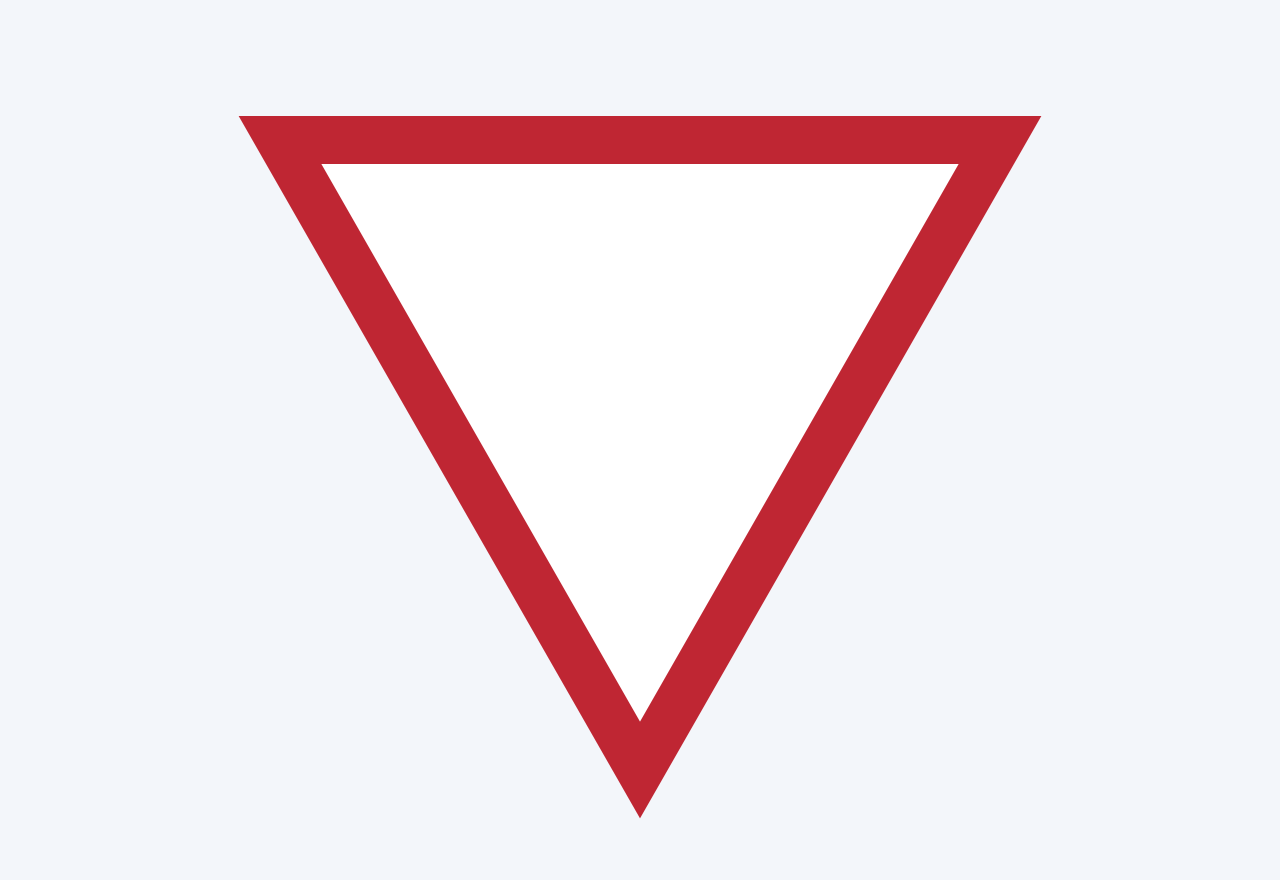
You approach this sign and see a clear, safe gap in cross traffic. What may you do?
- A. Stop completely anyway, because this sign always requires it
- B. Speed up to get ahead of the next approaching vehicle
- C. Proceed without stopping, as long as you yield to everyone
- D. Wait until there is no traffic visible in either direction
Show answer
Answer: C. Proceed without stopping, as long as you yield to everyone
A yield sign does not require a stop when a safe gap exists. It requires you to give way to others.
Question 19 · Road Scenarios
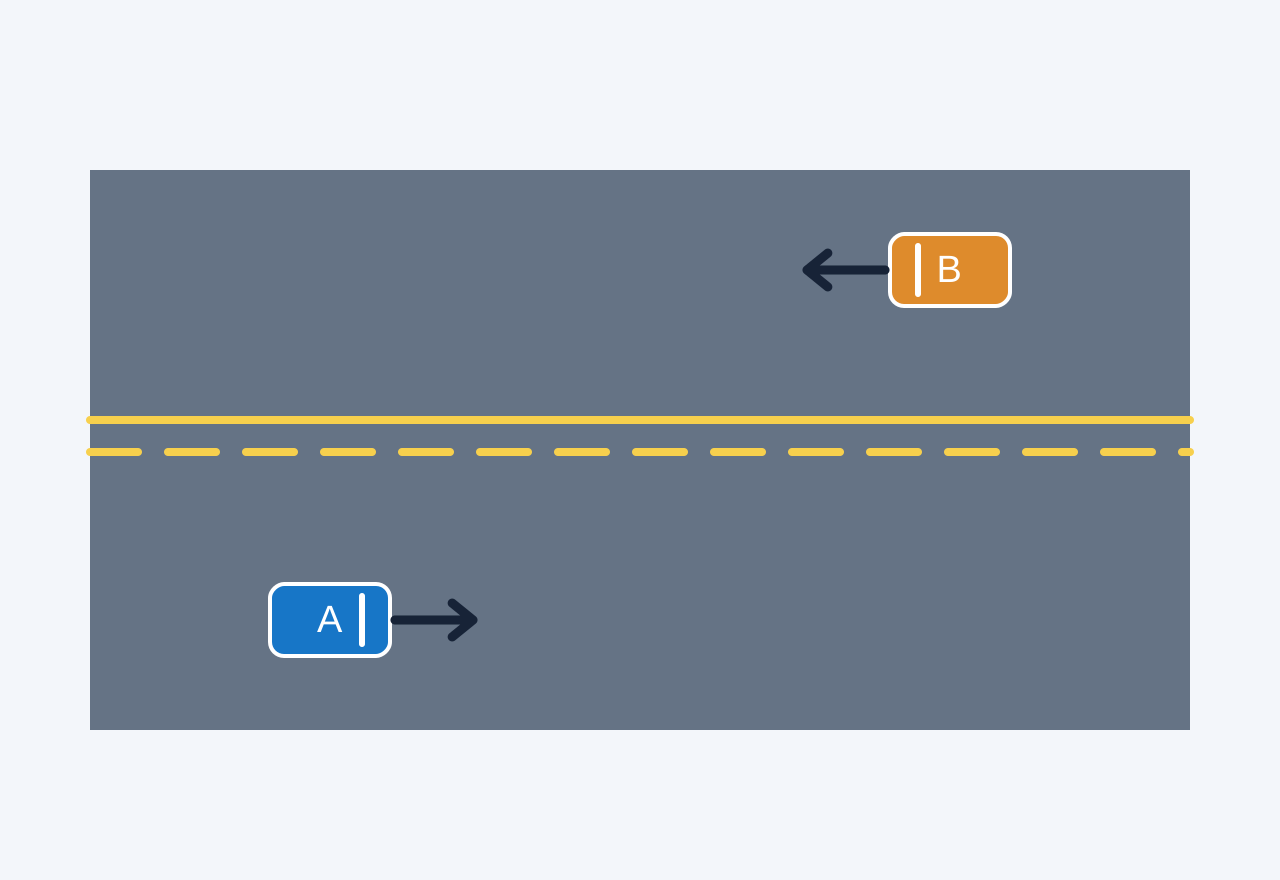
Can B, travelling the opposite way, pass in this scene?
- A. No, B has the solid line on its side
- B. Yes, any driver may pass on a broken line
- C. Only if A is also passing
- D. Yes, if B passes quickly
Show answer
Answer: A. No, B has the solid line on its side
With a solid and a broken line together, only the driver with the broken line on their side may pass.
Question 20 · Hazards
After a blowout, when should you brake?
- A. Immediately and as hard as possible
- B. Never at all
- C. Gently, once you have control
- D. Only after stopping
Show answer
Answer: C. Gently, once you have control
Hard braking can cause loss of control.
Question 21 · Signs and Signals
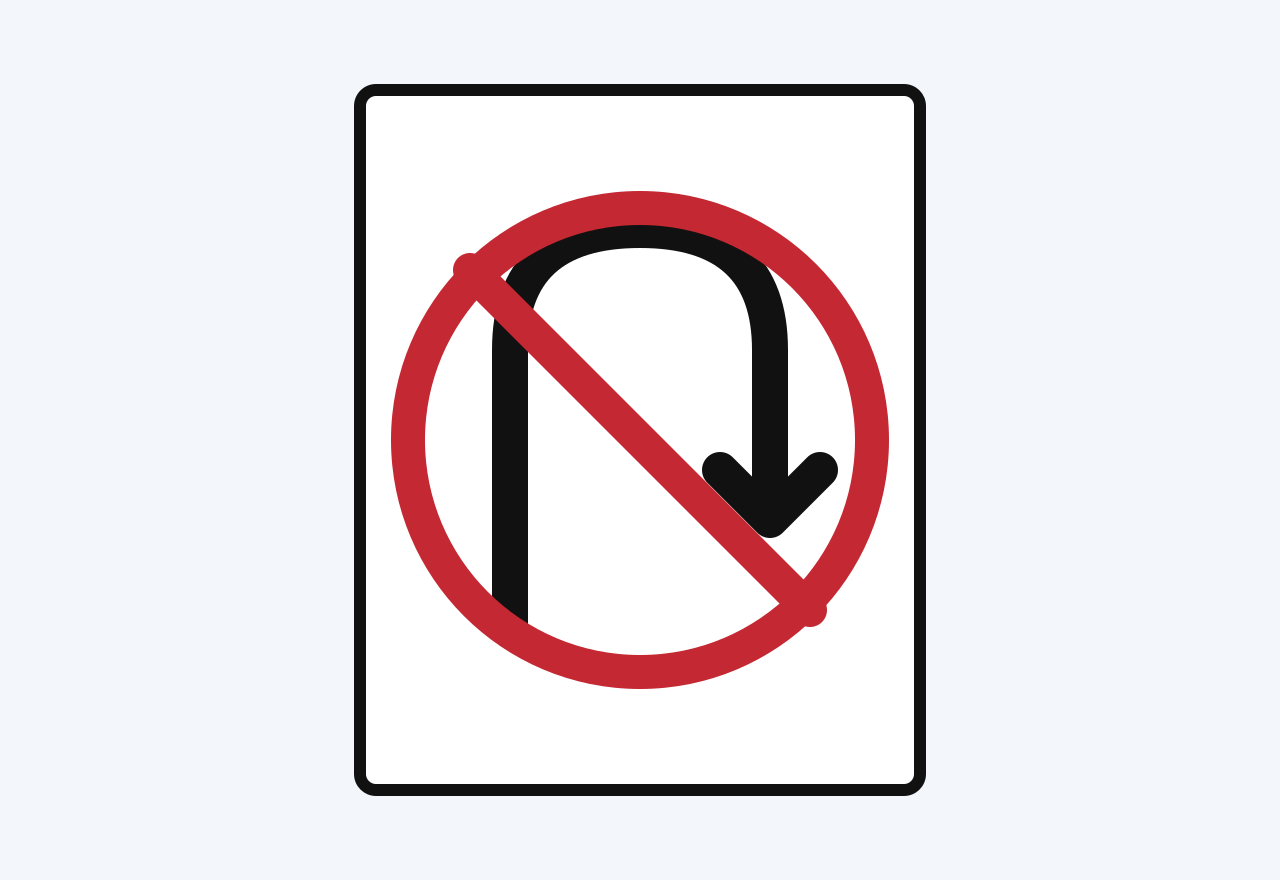
You realize you are going the wrong way just as you reach this sign. What should you do?
- A. Make a quick U-turn while there is a gap in traffic
- B. Continue to a place where you can turn around legally
- C. Reverse back to the last side street
- D. Turn around in the intersection if no police are near
Show answer
Answer: B. Continue to a place where you can turn around legally
Drive on to a place where turning around is legal and safe, such as a block you can loop around.
Question 22 · Highways
When should you signal for a highway exit?
- A. Well before you reach the exit lane
- B. No signal is needed
- C. After leaving the highway
- D. Only once you are in the exit lane
Show answer
Answer: A. Well before you reach the exit lane
Signal early so others know you plan to exit.
Question 23 · Safe Driving
When should you adjust your seat and mirrors?
- A. Before the car is moving
- B. Only on long trips
- C. While driving at low speed
- D. At the first red light
Show answer
Answer: A. Before the car is moving
Adjusting while driving takes your attention off the road.
Question 24 · Hazards
Why must you not stop on railway tracks?
- A. It damages the tracks
- B. It blocks the railway signals from working properly
- C. It is considered rude
- D. A train cannot stop quickly
Show answer
Answer: D. A train cannot stop quickly
Trains need a long distance to stop.
Question 25 · Safe Driving
Which can impair your driving?
- A. Some cold or allergy medicines
- B. Drinking plenty of water before the trip
- C. A glass of fruit juice
- D. Chewing gum while driving
Show answer
Answer: A. Some cold or allergy medicines
Some over-the-counter medications can cause drowsiness or slow reactions.
Question 26 · Road Scenarios
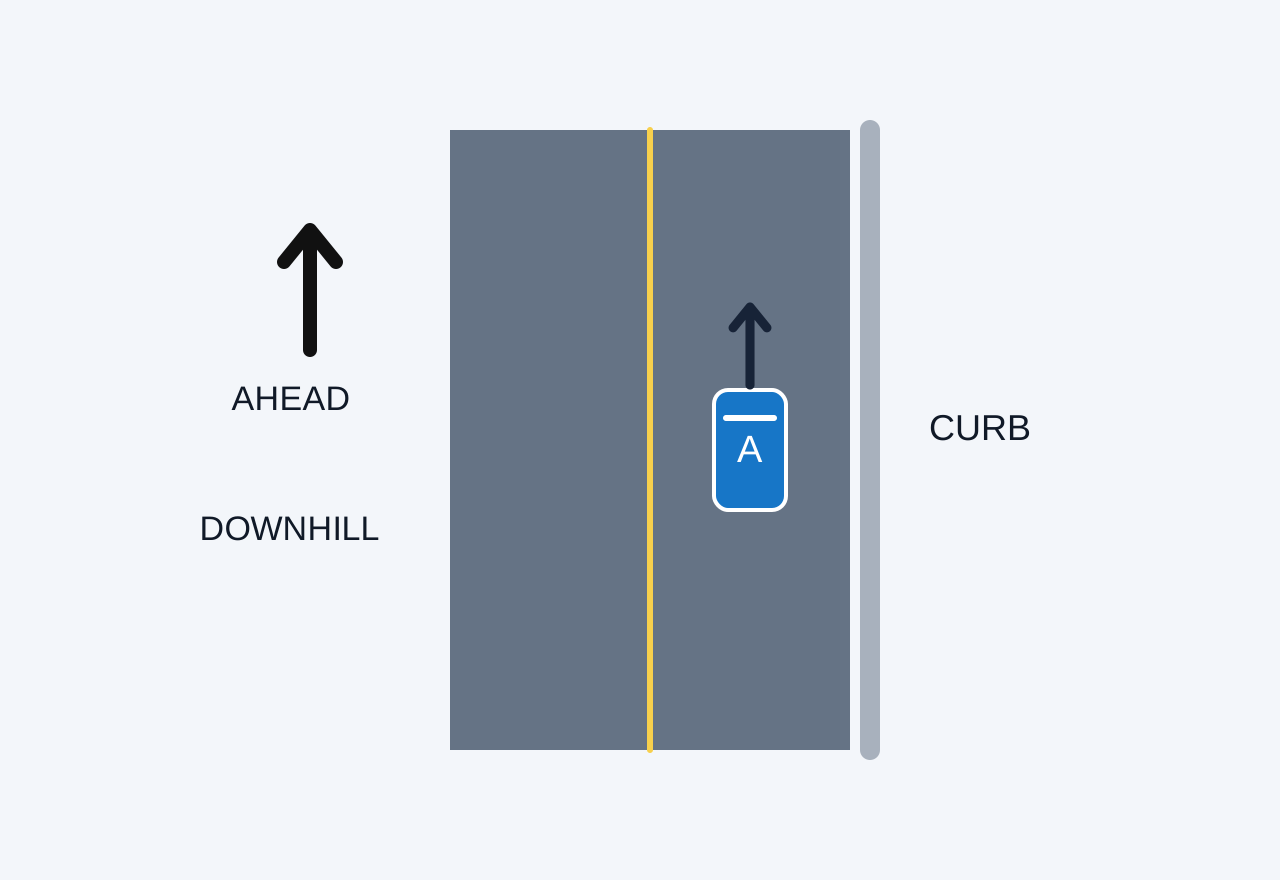
After turning the wheels right in this downhill spot, what should A do next?
- A. Pull forward until the front bumper touches the curb
- B. Shift into neutral so the brakes can rest
- C. Leave the engine running with the parking brake released so it settles
- D. Let the car roll gently until the right front tire touches the curb
Show answer
Answer: D. Let the car roll gently until the right front tire touches the curb
Resting the tire against the curb helps hold the car if it starts to move.
Question 27 · Sharing the Road
After pulling over for an emergency vehicle, when may you move again?
- A. As soon as the siren sounds quieter
- B. After waiting exactly 10 seconds
- C. After it passes and no others are coming
- D. Right away, once it is beside you
Show answer
Answer: C. After it passes and no others are coming
Stop until the emergency vehicle has passed and check for others.
Question 28 · Signs and Signals
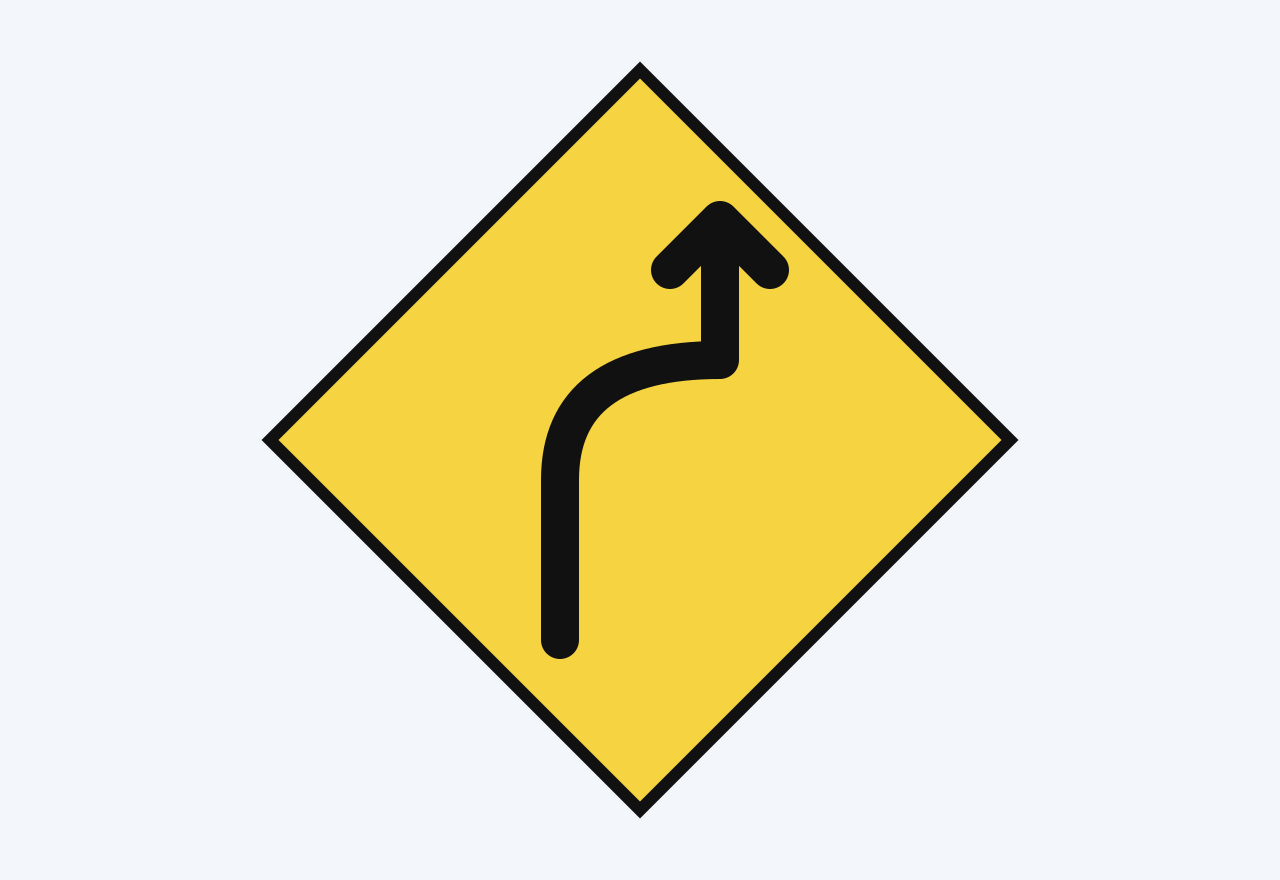
When is the best time to slow down for the curve this sign warns about?
- A. As you leave the curve
- B. Before you enter the curve
- C. Only if your tires squeal
- D. In the middle of the curve
Show answer
Answer: B. Before you enter the curve
Braking before the curve lets you go through it steadily. Braking in the curve can upset the vehicle.
Question 29 · Parking
Which rule applies to parking near a yield sign?
- A. The same 5-metre rule as for a stop sign
- B. There is no parking rule near yield signs
- C. You must stay at least 30 metres away
- D. You may park right beside a yield sign
Show answer
Answer: A. The same 5-metre rule as for a stop sign
The 5-metre rule applies to both stop and yield signs.
Question 30 · Vehicle Preparation
When is the best time to check tire pressure?
- A. Only in summer
- B. When tires are cold
- C. When tires are hot
- D. After a long drive
Show answer
Answer: B. When tires are cold
Driving heats tires and changes readings.
Ready to test yourself?
Take a 30-question practice exam with the answers hidden. You get a score (pass with 25 of 30, like the real test) and an explanation for every answer. For the real test, see about the Class 7 knowledge test.
More free practice and lessons
- Free Alberta Class 7 practice test
- Road signs practice test
- Rules of the road practice test
- Alberta Class 7 Practice Mock Exam 1 with answers
- Alberta Class 7 Practice Mock Exam 2 with answers
- Alberta Class 7 Practice Mock Exam 3 with answers
- Alberta Class 7 Practice Mock Exam 4 with answers
- Alberta Class 7 Practice Mock Exam 5 with answers
- Alberta Class 7 Practice Mock Exam 6 with answers
- Reading signs by shape and colour
- Traffic lights and turns on red
- School and playground zones
- Right-of-way at stops and uncontrolled intersections
- Traffic circles and roundabouts
- Parking on hills
- Where you can't park
- Space, scanning and following distance
- Distraction and impairment
- Merging, exiting and passing
- Lane markings and passing
- School buses and emergency vehicles
- Roadside workers, tow trucks and snowplows
- Cyclists, motorcycles and large trucks
- Night, weather and slippery roads
- Skids, blowouts and stalls
- Class 7 learner's licence rules
- Before you drive
- Reading the diagrams
- About the Alberta Class 7 knowledge test
- 7-day study plan
- Study tips