Alberta Class 7 Practice Mock Exam 5
All 30 questions from Mock Exam 5, with answers and explanations.
A mixed exam: 6 sign questions, 6 road diagrams and 18 questions on the rules of the road, including hazards, sharing the road and highways.
These are the 30 questions from Mock Exam 5, original practice questions on signs and the rules of the road, checked against the Alberta Driver’s Guide. Read through them with Show answer, or take the exam online first with the answers hidden and see your score. No sign-in needed.
These are original practice questions, not actual knowledge test questions. Each links to the page of the Alberta Driver’s Guide it’s based on, so you can check the rule. Questions were last reviewed in October 2026; read how we write and check them.
Question 1 · Signs and Signals
Arrows painted in your lane show left turn only, but you want to go straight. What should you do?
- A. Go straight anyway, since you are already in the lane
- B. Go straight if no one is behind you to be affected
- C. Stop in the lane and wait for a gap to move over
- D. Turn left or move to a proper lane earlier next time
Show answer
Answer: D. Turn left or move to a proper lane earlier next time
Lane-use arrows tell you what moves are allowed from that lane. Plan ahead and choose the right lane.
Question 2 · Signs and Signals
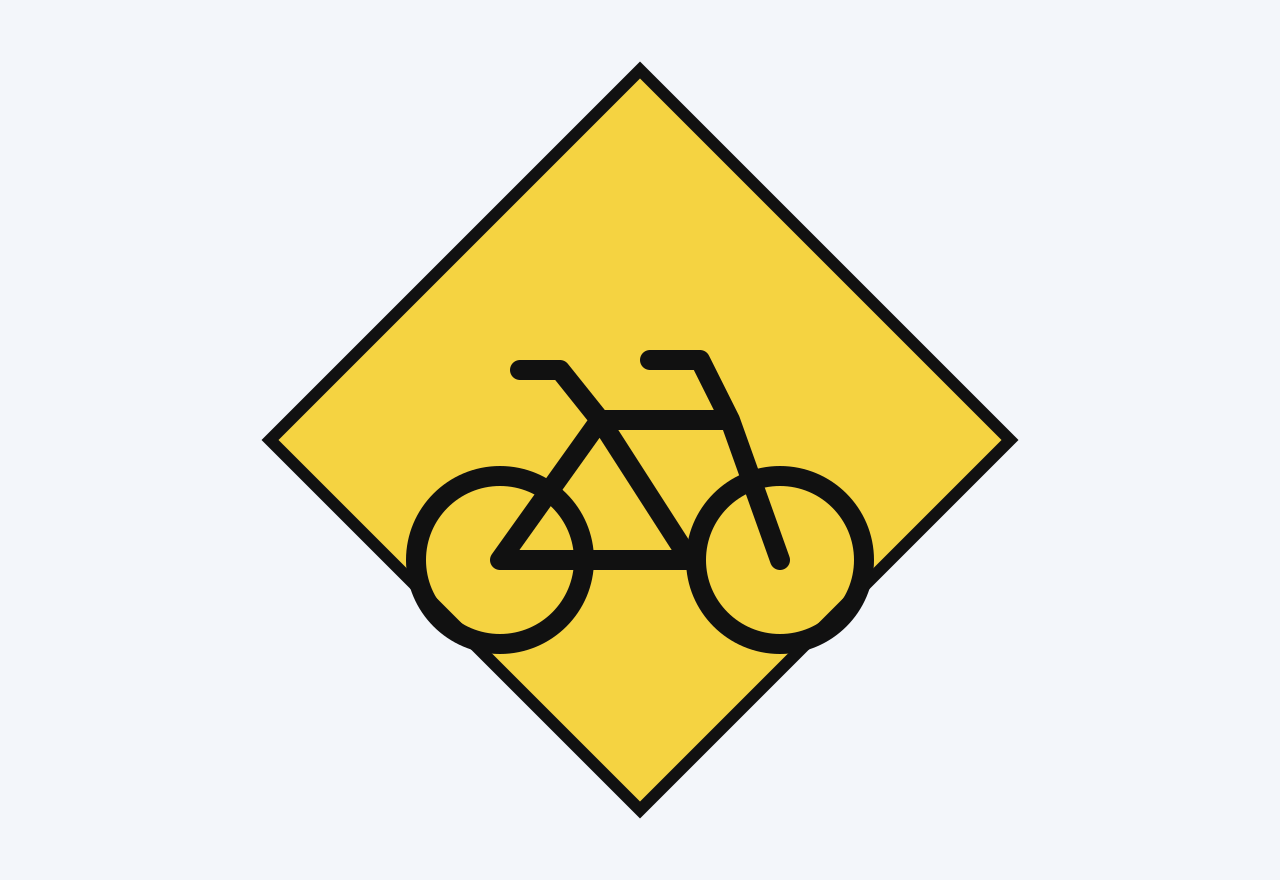
What does this sign warn you about?
- A. Bicycle parking is available ahead
- B. Cyclists may be on or crossing the road ahead
- C. Bicycles are not allowed on this road
- D. A bike lane begins and cars must leave the road
Show answer
Answer: B. Cyclists may be on or crossing the road ahead
This sign warns that cyclists may be present. Watch for them and give them room.
Question 3 · Signs and Signals
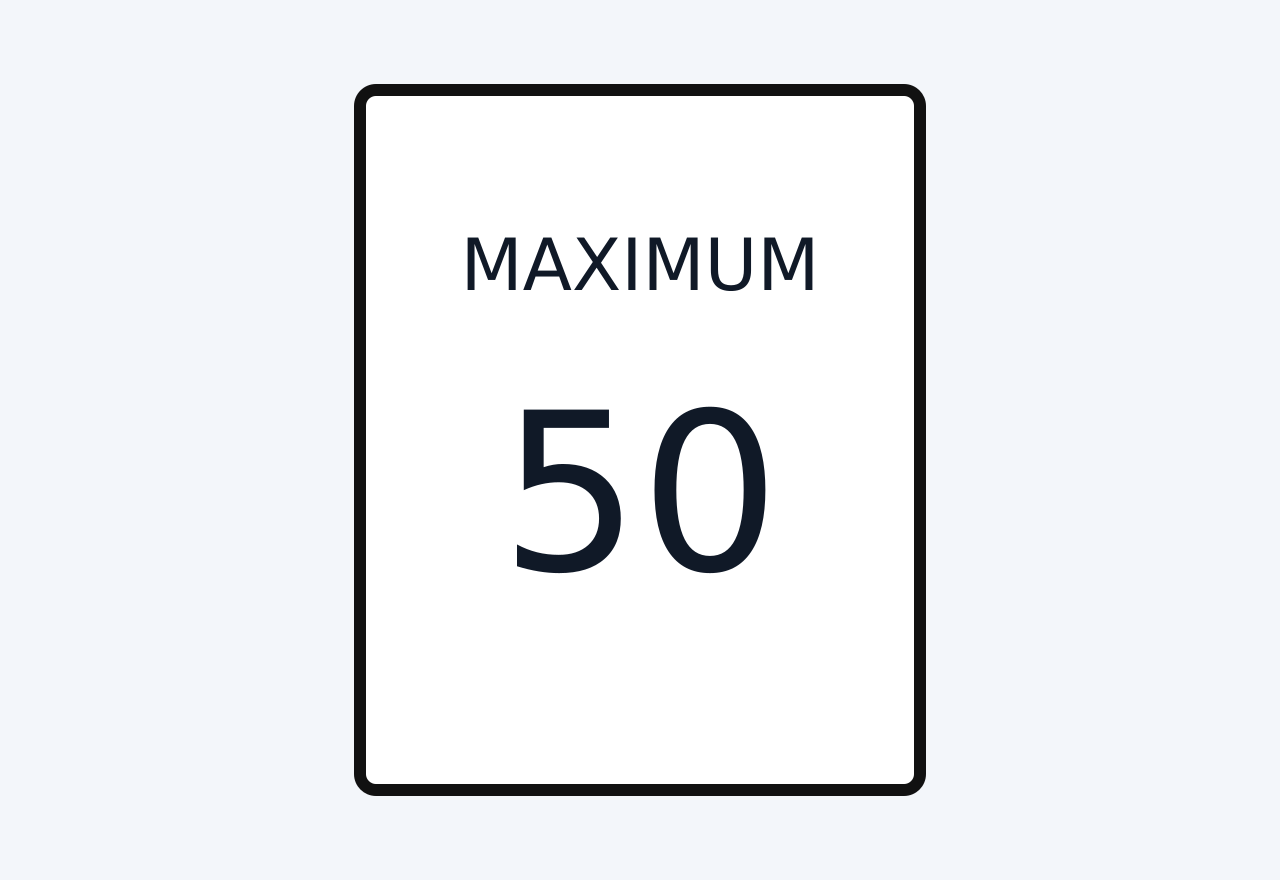
What does this sign tell you?
- A. 50 km/h is the minimum speed allowed on this road
- B. 50 km/h applies only during school hours
- C. 50 km/h is a suggested speed you may go over slightly
- D. 50 km/h is the highest legal speed in good conditions
Show answer
Answer: D. 50 km/h is the highest legal speed in good conditions
This is a maximum. You may not go faster, and you should slow down when conditions are poor.
Question 4 · Safe Driving
Why should you look well ahead while driving instead of just at the car in front?
- A. So you do not need to read the road signs
- B. To spot hazards early and have time to react
- C. Because it keeps you from feeling tired
- D. Because it helps your car use less fuel
Show answer
Answer: B. To spot hazards early and have time to react
Looking far ahead helps you see problems early and plan.
Question 5 · Hazards
Your car starts to skid. What should you do?
- A. Look and steer where you want the front of the car to go
- B. Brake hard right away
- C. Accelerate to regain grip
- D. Steer the opposite way from where you want to go
Show answer
Answer: A. Look and steer where you want the front of the car to go
To regain control, look and steer where you want to go.
Question 6 · Hazards
Your car breaks down on a highway. Where should you stop?
- A. In the travel lane with the hazards on
- B. On a curve where it is shaded
- C. In the median between the roads
- D. As far off the road as safely possible
Show answer
Answer: D. As far off the road as safely possible
Get out of traffic and make your car visible.
Question 7 · Sharing the Road
On a highway divided by a median, you approach a stopped school bus from the front. Its red lights are flashing. What may you do?
- A. Stop, as all traffic must stop for any school bus with red lights
- B. Proceed with caution and watch for pedestrians
- C. Speed up to pass quickly
- D. Cross the median
Show answer
Answer: B. Proceed with caution and watch for pedestrians
On a divided highway, oncoming traffic may proceed with caution.
Question 8 · Road Scenarios
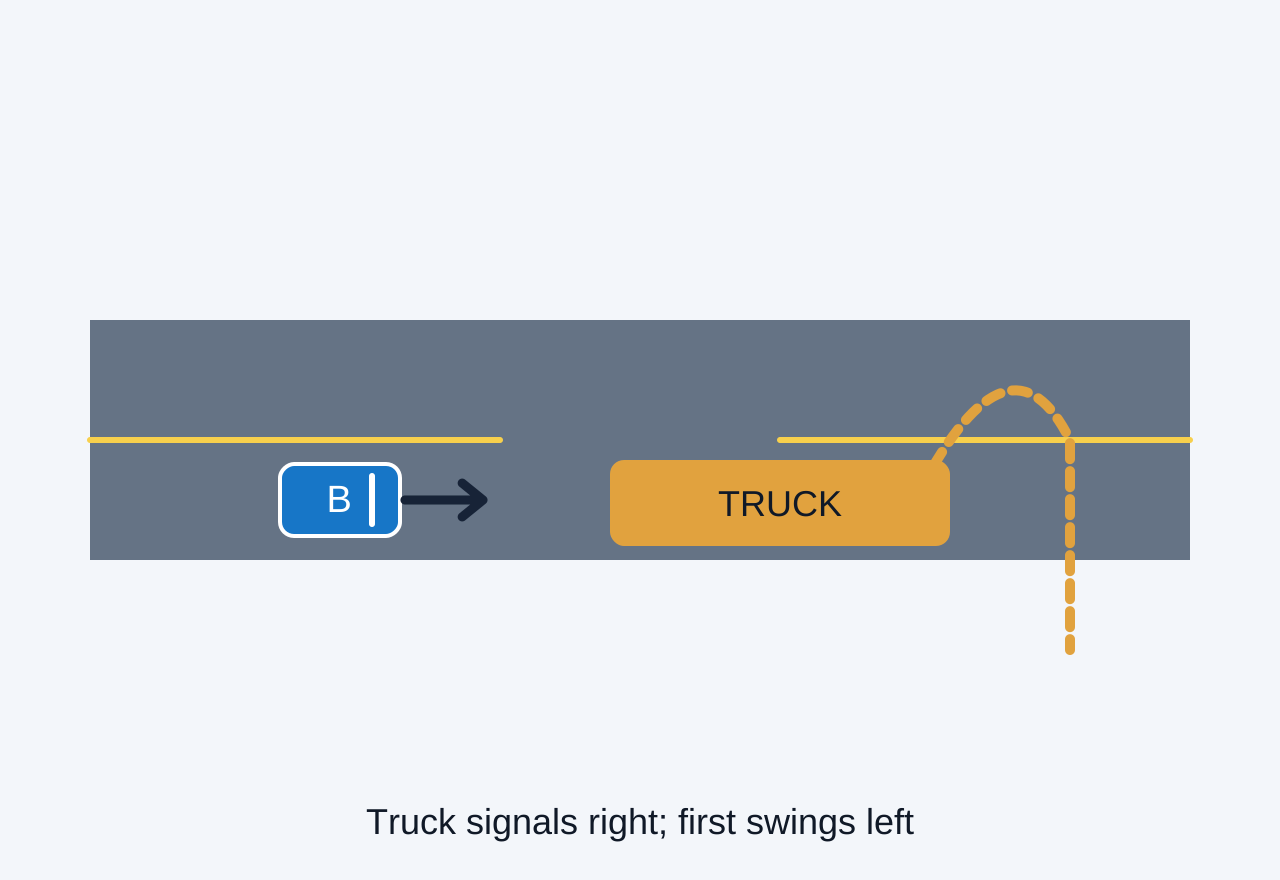
A long truck signalling right has swung left to make its turn. Car B is behind it on the right. What should B do?
- A. Pull up beside the truck's front wheels and wait
- B. Pass on the left while the truck is turning
- C. Pass on the right before the truck starts its turn
- D. Stay back and not pull into the gap beside the truck
Show answer
Answer: D. Stay back and not pull into the gap beside the truck
Long vehicles often swing left to turn right. Never move into the space on their right.
Question 9 · Licensing
What is the legal alcohol limit for a Class 7 learner driving a car?
- A. Below 0.08
- B. One drink per hour
- C. Below 0.05
- D. Zero
Show answer
Answer: D. Zero
Drivers in the GDL program, including learners, must have zero alcohol in their body when driving.
Question 10 · Road Scenarios
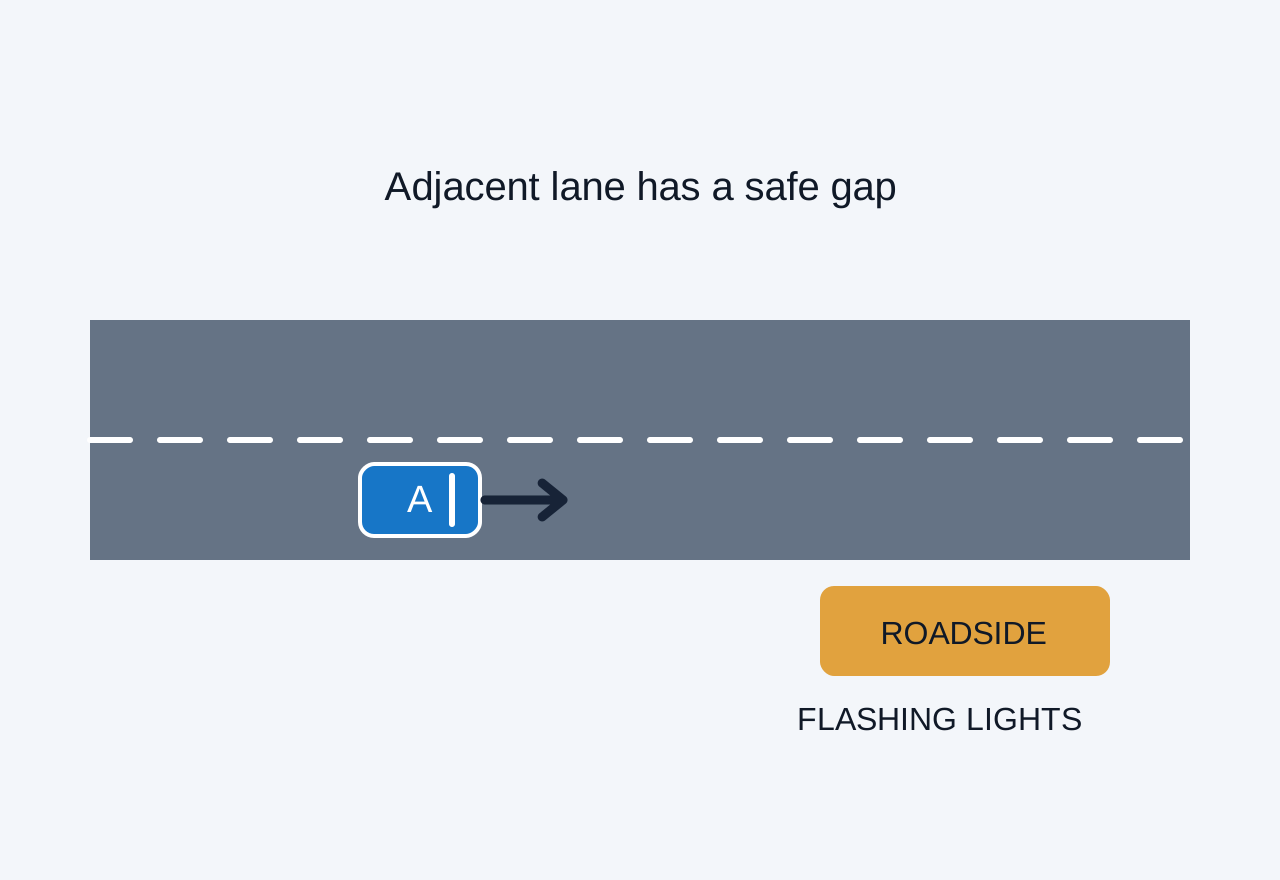
A is next to a stopped maintenance truck with flashing lights. The lane to A's left has a safe gap. Best action?
- A. Stay in the lane at the normal limit
- B. Drive on the shoulder beside the workers
- C. Stop beside the truck to see what happened
- D. Move over to the far lane when it is safe
Show answer
Answer: D. Move over to the far lane when it is safe
Moving over, when you can do it safely, gives roadside workers more room.
Question 11 · Parking
You park on a busy street. What should you do before opening your door?
- A. Open it quickly so others see you
- B. Open it partway and wait a moment for traffic to notice
- C. Check your mirror and look back for traffic and cyclists
- D. Honk to warn others, then open it
Show answer
Answer: C. Check your mirror and look back for traffic and cyclists
A door opened into traffic can hit a cyclist or vehicle. Look first.
Question 12 · Hazards
When must you switch to low beams for oncoming traffic?
- A. Within 100 metres
- B. Only when it flashes you
- C. Within 50 metres
- D. Within 300 metres
Show answer
Answer: D. Within 300 metres
Use low beams when within 300 metres of oncoming vehicles.
Question 13 · Signs and Signals
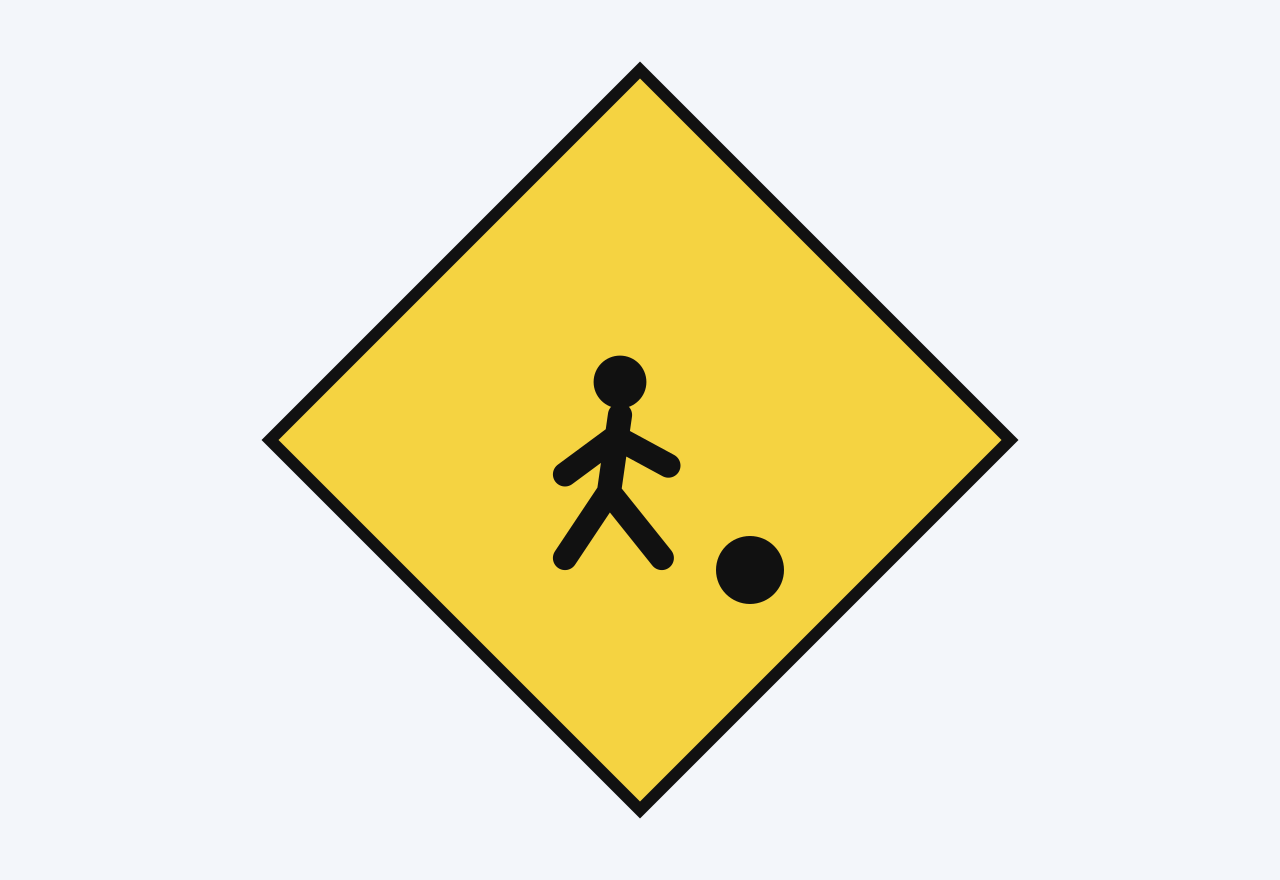
What does this sign without a speed tab warn you about?
- A. A 30 km/h zone that applies all day long
- B. A playground area where children may be nearby
- C. A street ahead that is for pedestrians only
- D. A loading area where school buses stop
Show answer
Answer: B. A playground area where children may be nearby
This playground-area sign warns of children playing. Without a speed tab it does not set a reduced limit.
Question 14 · Highways
What is an acceleration lane used for?
- A. To speed up to match highway traffic
- B. To pass slow traffic on the highway
- C. To park in an emergency situation
- D. To stop and wait for a gap in traffic
Show answer
Answer: A. To speed up to match highway traffic
The acceleration lane lets you build up speed to merge safely.
Question 15 · Road Scenarios
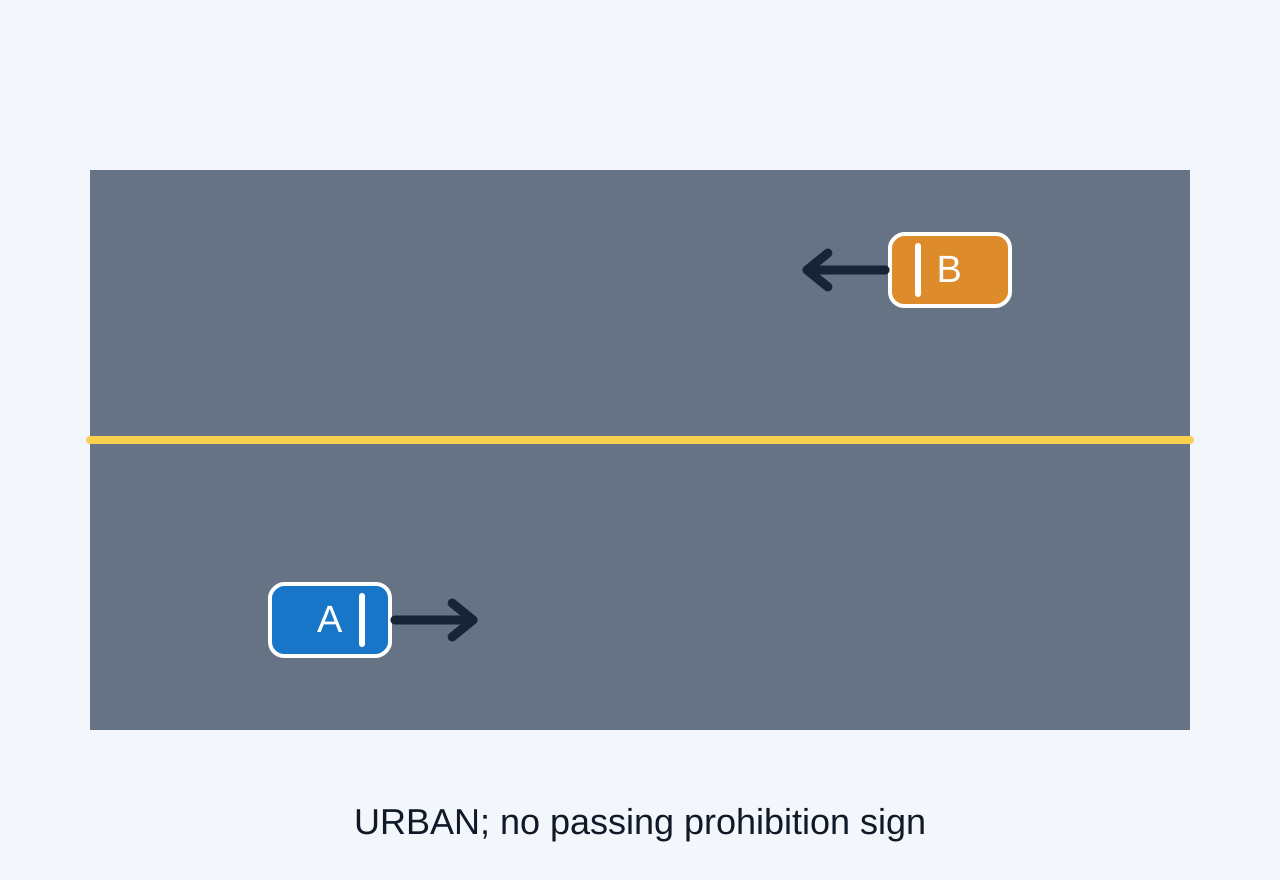
On an urban road with a single solid yellow centre line, no sign bans passing and the view is clear. What may A do?
- A. Cross a double solid yellow line nearby instead
- B. Never pass on any solid yellow line
- C. Pass, as long as every safety condition is met
- D. Pass even with oncoming traffic close
Show answer
Answer: C. Pass, as long as every safety condition is met
Within an urban area, a safe pass across a single solid yellow line is permitted.
Question 16 · Safe Driving
When is the best time to enter a destination into your navigation system?
- A. Before you start driving
- B. At a red light
- C. While driving on a straight road
- D. While going slowly
Show answer
Answer: A. Before you start driving
Program navigation before you move so your attention stays on the road.
Question 17 · Parking
You park facing uphill on a road with no curb. Which way should you turn your wheels?
- A. Right, toward the edge of the road
- B. Left, toward the centre of the road
- C. Straight ahead with the brake set
- D. It does not matter on a rural road
Show answer
Answer: A. Right, toward the edge of the road
With no curb, turn the wheels right so a rolling car goes off the road.
Question 18 · Vehicle Preparation
Before getting into your car, why should you walk around it?
- A. To admire the car's paint
- B. It is required by law
- C. To check for people, objects or damage
- D. To warm up first
Show answer
Answer: C. To check for people, objects or damage
A walk-around helps spot hazards.
Question 19 · Signs and Signals
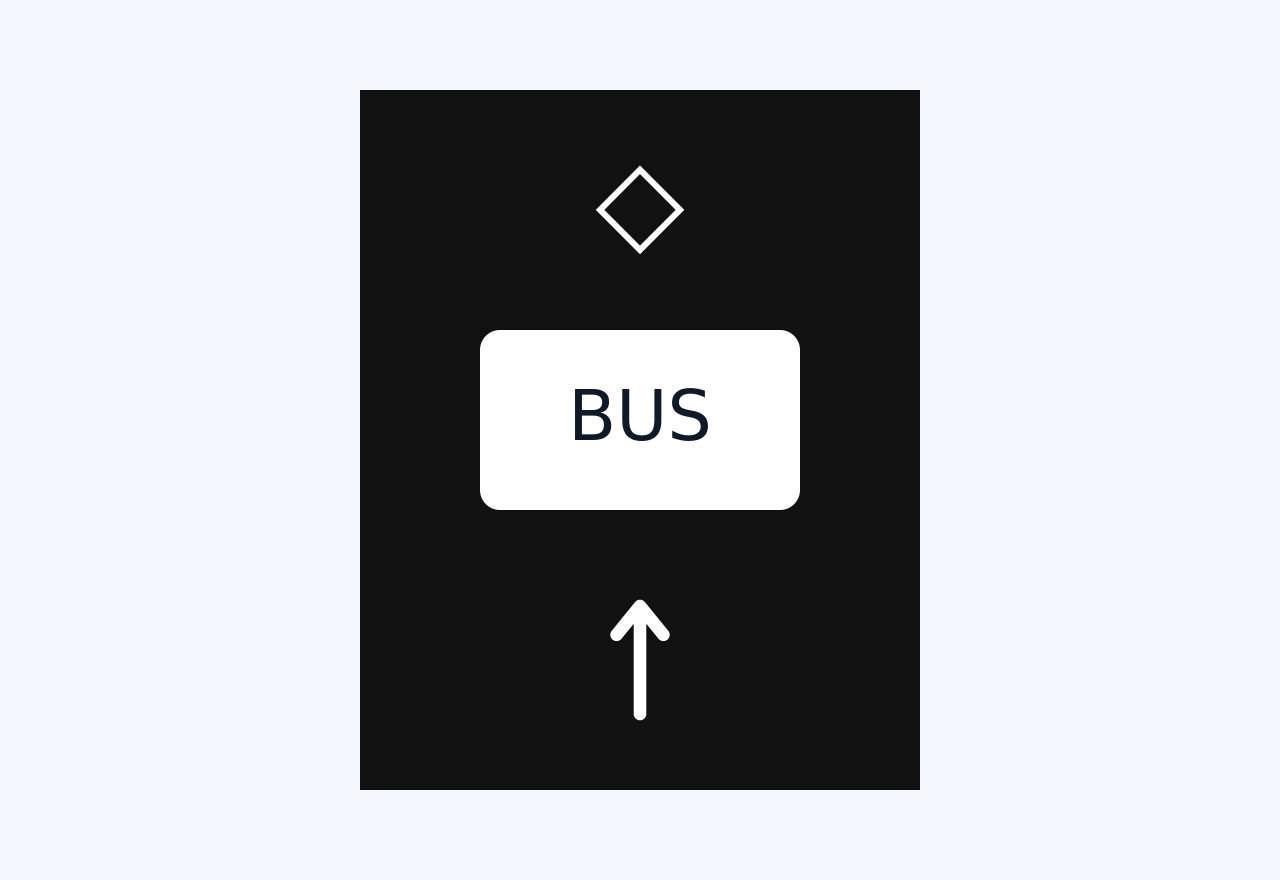
What does this sign mean?
- A. Buses must use the next lane over
- B. Buses are not allowed in this lane
- C. A bus stop is in this lane
- D. The lane is reserved for buses
Show answer
Answer: D. The lane is reserved for buses
The diamond symbol marks a reserved lane. This one is for buses.
Question 20 · Signs and Signals
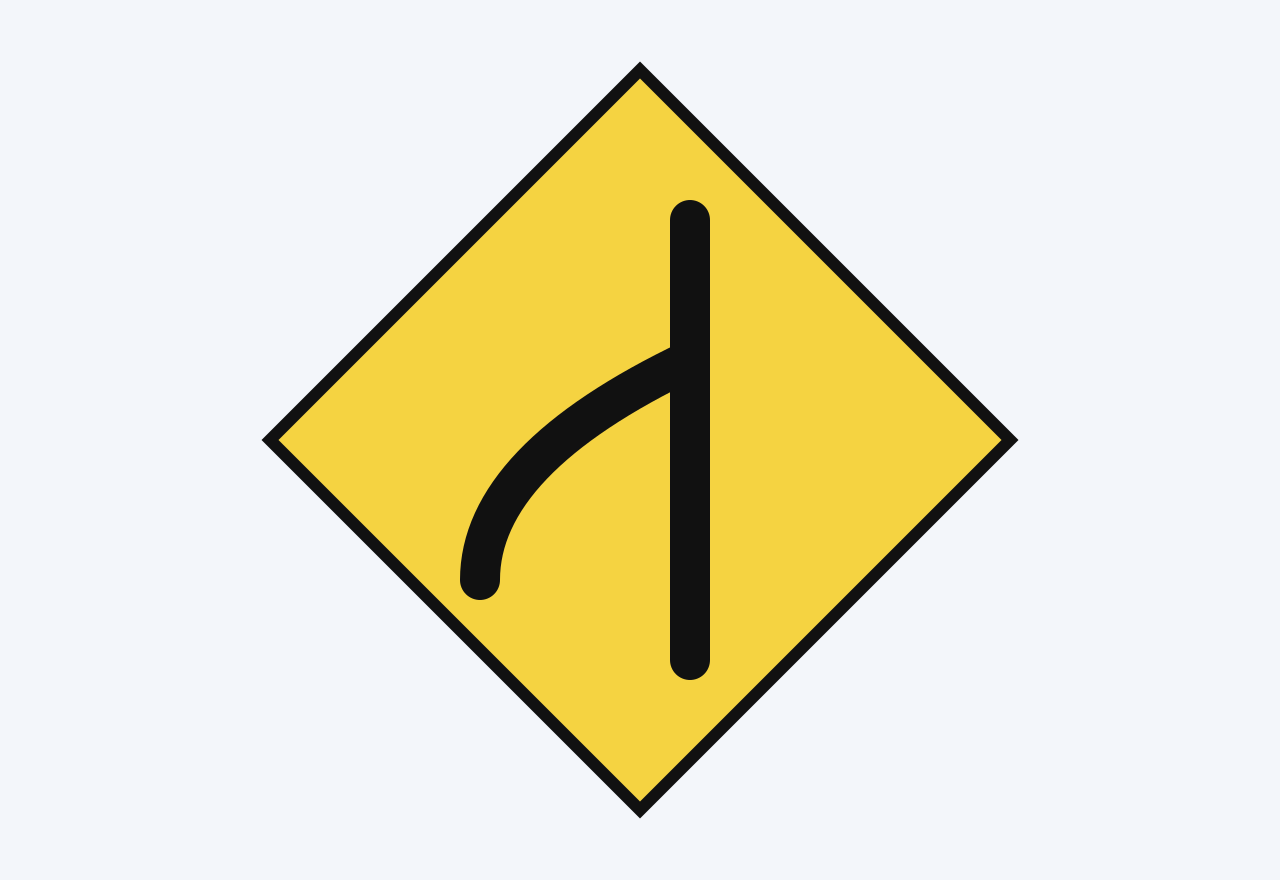
What does this sign warn you about?
- A. A sharp curve to the left is ahead
- B. Traffic will be merging into your road ahead
- C. Your lane ends and you must merge left
- D. The road divides into two separate roads
Show answer
Answer: B. Traffic will be merging into your road ahead
This merge sign warns that another lane of traffic will join your road ahead.
Question 21 · Signs and Signals
Unless other times are posted, when is an Alberta school zone in effect?
- A. Every day from 8:00 a.m. to 5:00 p.m.
- B. On school days: 8:00–9:30 a.m., 11:30 a.m.–1:30 p.m. and 3:00–4:30 p.m.
- C. On school days, all day from 7:00 a.m. to 6:00 p.m., plus weekend events
- D. Every day from 8:30 a.m. to one hour after sunset
Show answer
Answer: B. On school days: 8:00–9:30 a.m., 11:30 a.m.–1:30 p.m. and 3:00–4:30 p.m.
These are the provincial school zone times. Municipalities can post different times.
Question 22 · Intersections
In which direction does traffic travel in an Alberta roundabout or traffic circle?
- A. Counterclockwise
- B. Clockwise
- C. Depends on the time of day
- D. Either direction
Show answer
Answer: A. Counterclockwise
Traffic always circulates counterclockwise around the centre island.
Question 23 · Signs and Signals
You want to turn right at a red light. No sign prohibits it. What must you do first?
- A. Wait for the light to turn green
- B. Sound your horn to warn any pedestrians
- C. Slow down and turn if the way looks clear of traffic and people
- D. Come to a complete stop before the stop line or crosswalk
Show answer
Answer: D. Come to a complete stop before the stop line or crosswalk
Right turns on red are allowed after a complete stop, unless a sign prohibits them.
Question 24 · Road Scenarios
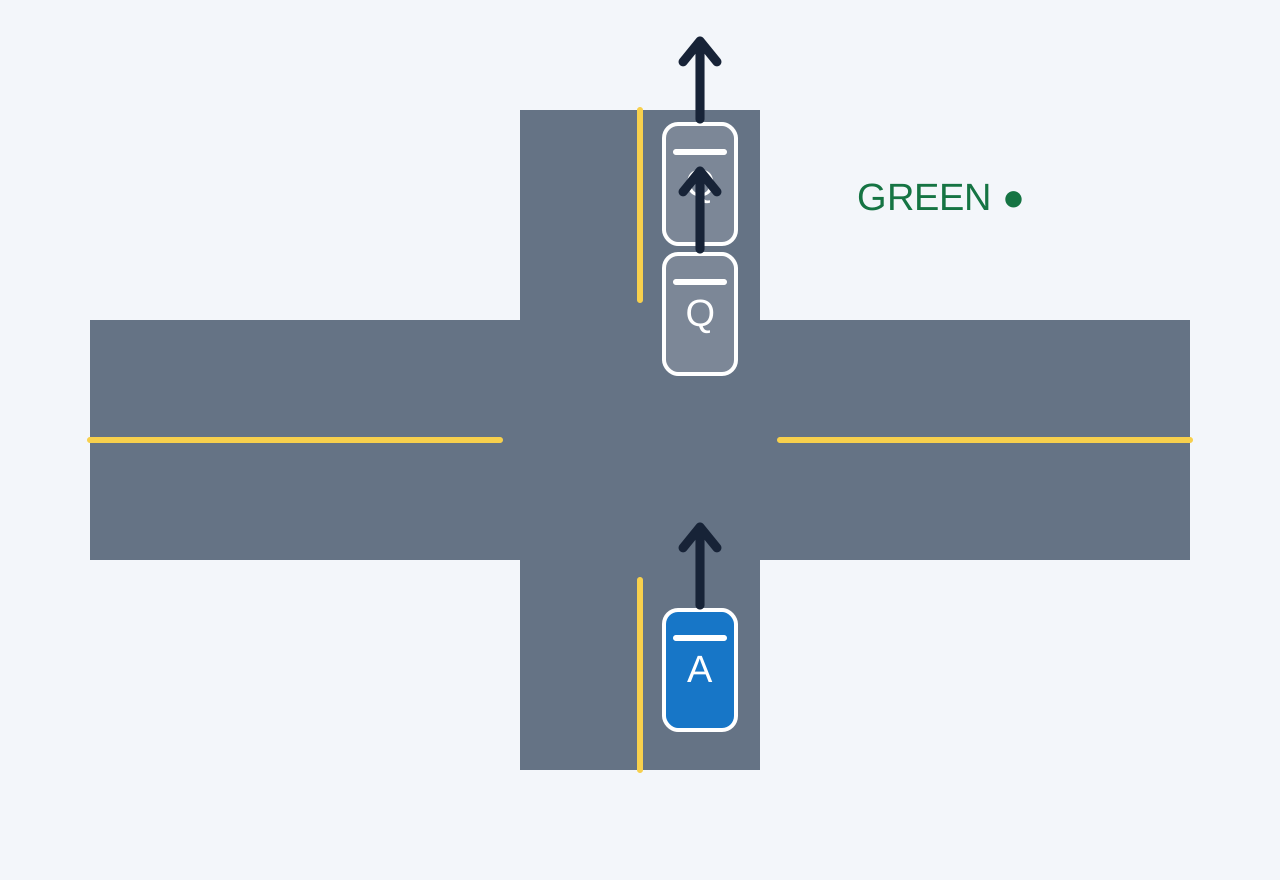
A has a green light, but stopped traffic ahead leaves no room to clear the intersection. What should A do?
- A. Use the oncoming lane to get across the gap
- B. Enter, then wait in the middle of the intersection
- C. Enter and stop in the far crosswalk if needed
- D. Wait behind the stop line until there is room
Show answer
Answer: D. Wait behind the stop line until there is room
Do not enter an intersection unless you can clear it completely, including the crosswalks.
Question 25 · Sharing the Road
A large truck is signalling right and swinging left. You are behind it. What should you do?
- A. Pass it on the right side
- B. Stay back and wait for it to finish turning
- C. Pass it on the left side
- D. Pull up beside it on the right and wait there for it to go
Show answer
Answer: B. Stay back and wait for it to finish turning
Trucks often swing wide to turn. Never squeeze into the gap on their right.
Question 26 · Road Scenarios
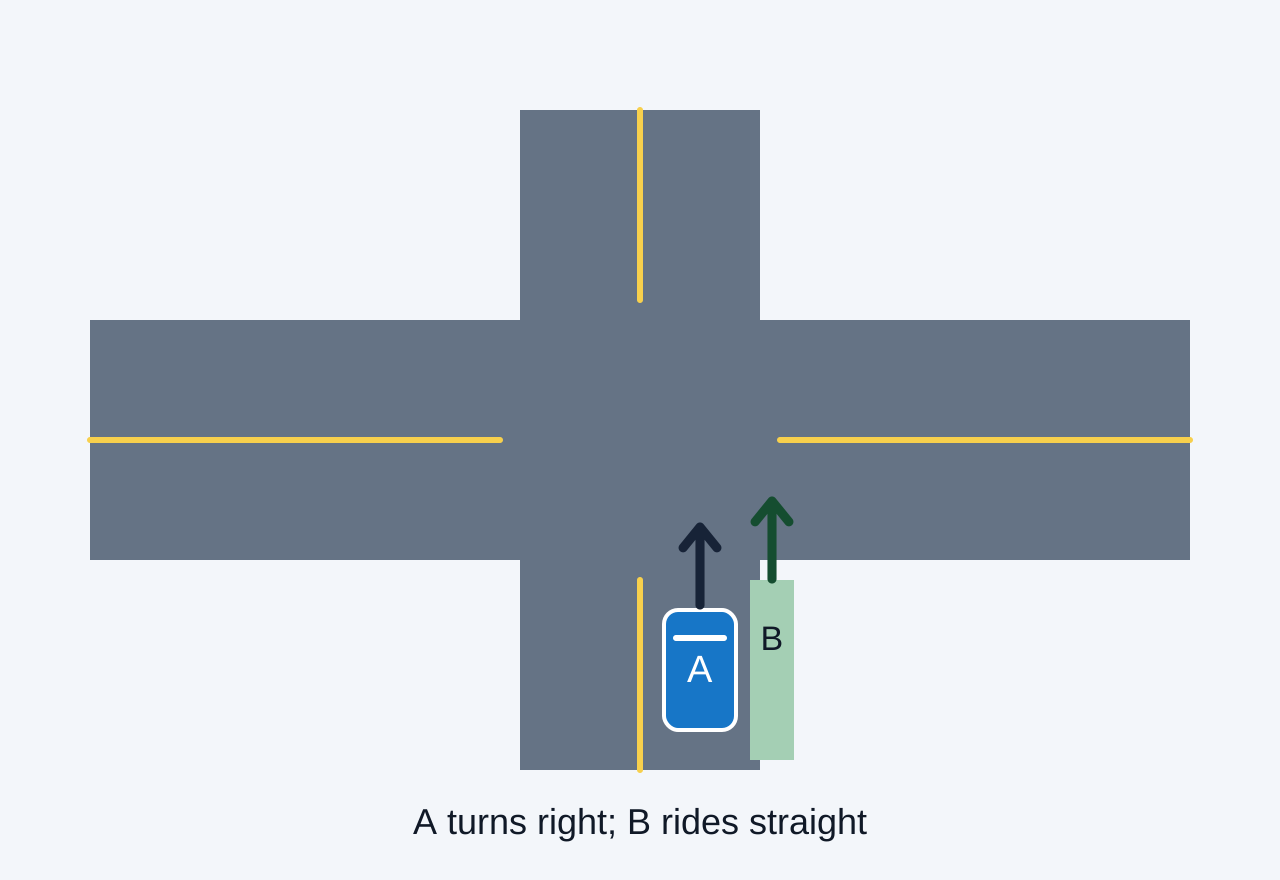
A wants to turn right. B, a cyclist, is riding straight ahead beside A on the right. What should A do?
- A. Let B pass, check the blind spot, then turn
- B. Speed up to complete the turn ahead of B
- C. Turn slowly and expect B to stop for the car
- D. Turn first, since A signalled before B arrived
Show answer
Answer: A. Let B pass, check the blind spot, then turn
Turning across a cyclist's path is dangerous. Let B go by, check your blind spot, then turn.
Question 27 · Sharing the Road
On a 100 km/h highway, you pass a stopped emergency vehicle with lights flashing in the next lane. What is the maximum speed?
- A. 90 km/h
- B. 100 km/h
- C. 60 km/h
- D. 80 km/h
Show answer
Answer: C. 60 km/h
In the lane next to the stopped vehicle, slow to 60 km/h or the posted limit, whichever is lower.
Question 28 · Road Scenarios
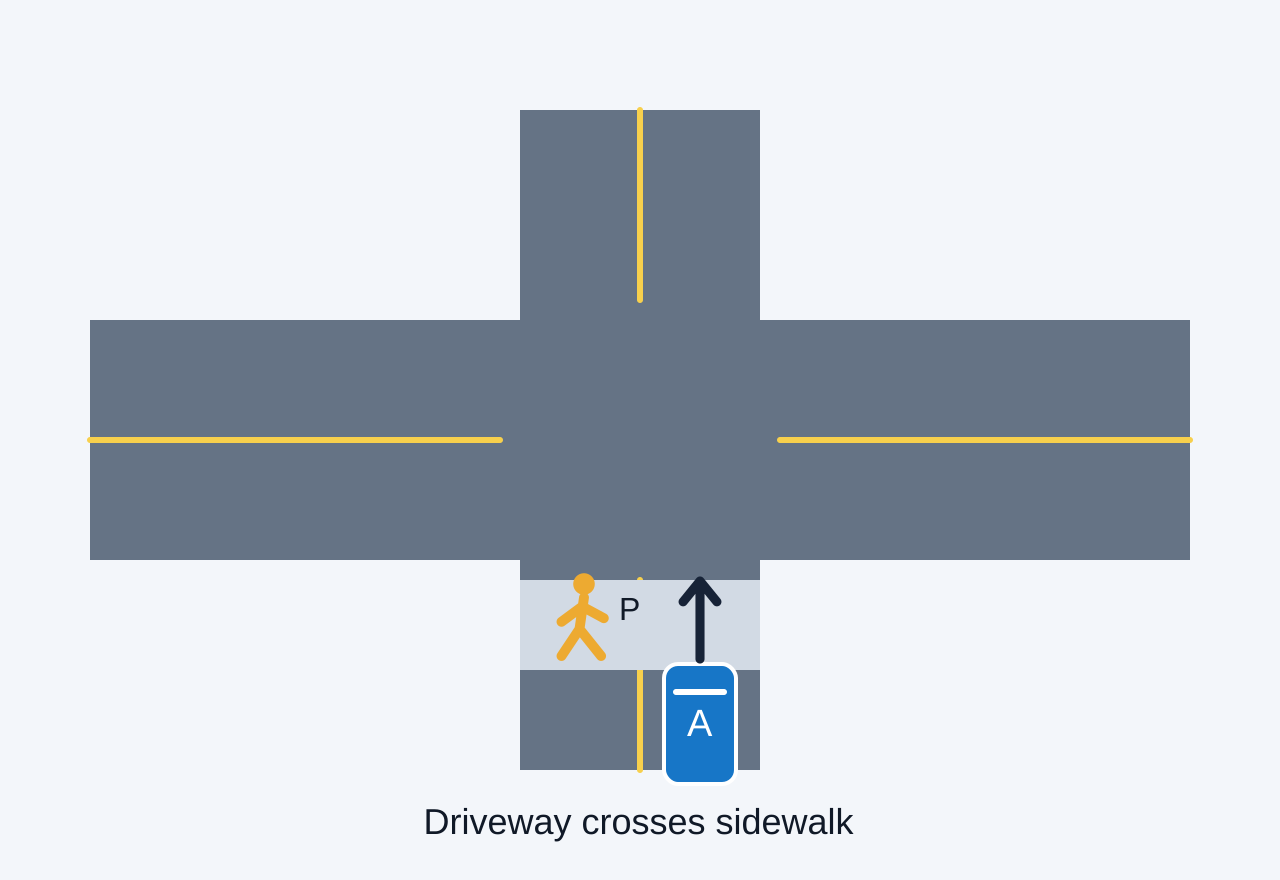
A is leaving a driveway. P is walking along the sidewalk A must cross. What should A do?
- A. Stop before the sidewalk, let P pass, then enter the road when safe
- B. Honk so P waits on the sidewalk while A pulls out onto the road
- C. Roll slowly across the sidewalk without stopping
- D. Stop across the sidewalk while waiting for a gap in traffic
Show answer
Answer: A. Stop before the sidewalk, let P pass, then enter the road when safe
When leaving a driveway, stop before the sidewalk, yield to pedestrians, then yield to road traffic.
Question 29 · Signs and Signals
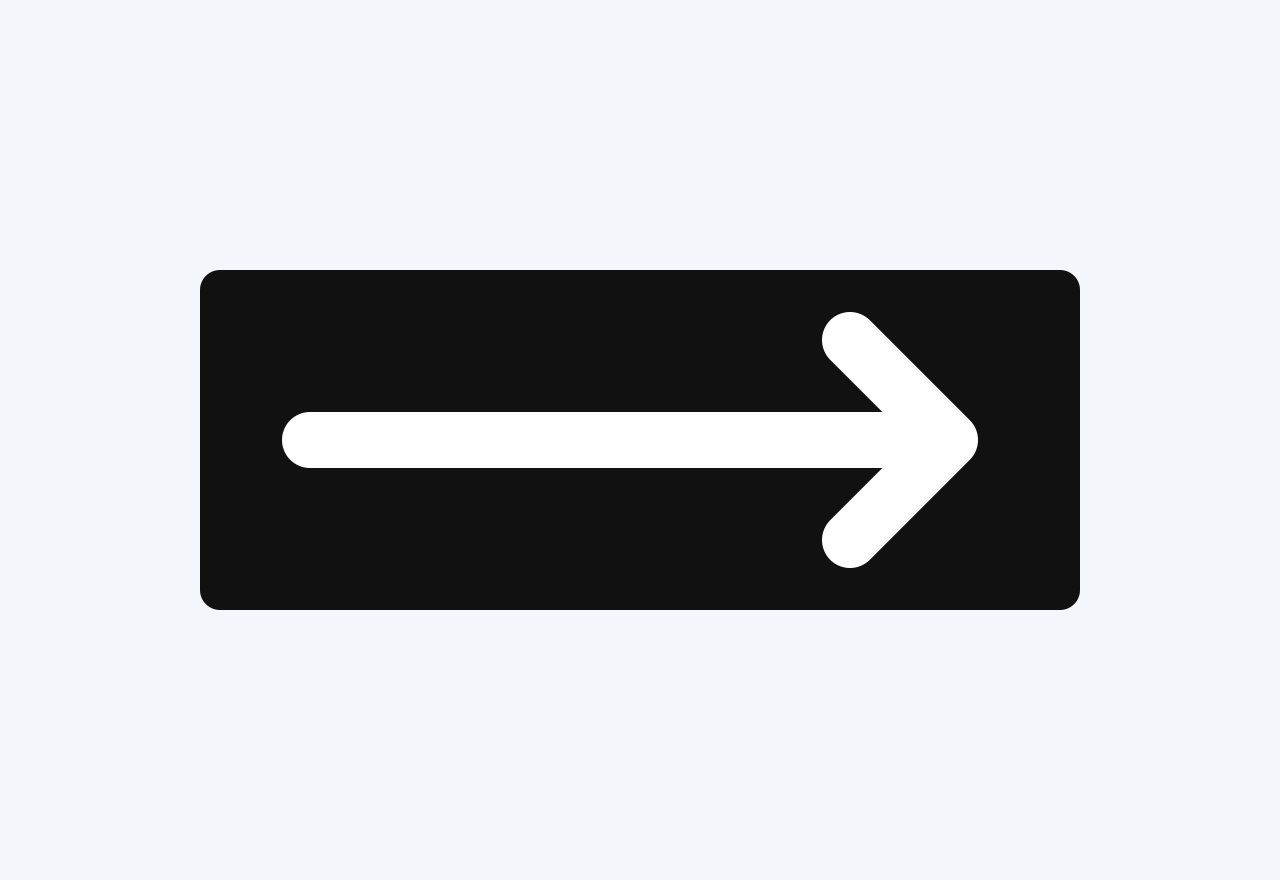
What does this sign tell you about the road it is posted on?
- A. Traffic may travel only in the direction of the arrow
- B. The road curves sharply in the arrow's direction
- C. You must turn in the arrow's direction to continue
- D. The road is a detour route for one block
Show answer
Answer: A. Traffic may travel only in the direction of the arrow
This is a one-way sign. All traffic on that road moves in the direction the arrow points.
Question 30 · Highways
Before passing on a two-lane highway, what must you be sure of?
- A. No vehicles are behind you at the time
- B. There is enough clear road to finish safely
- C. You can complete the pass in one second
- D. The car ahead is going under the limit
Show answer
Answer: B. There is enough clear road to finish safely
Pass only when no oncoming traffic is close and you can complete the pass.
Ready to test yourself?
Take a 30-question practice exam with the answers hidden. You get a score (pass with 25 of 30, like the real test) and an explanation for every answer. For the real test, see about the Class 7 knowledge test.
More free practice and lessons
- Free Alberta Class 7 practice test
- Road signs practice test
- Rules of the road practice test
- Alberta Class 7 Practice Mock Exam 1 with answers
- Alberta Class 7 Practice Mock Exam 2 with answers
- Alberta Class 7 Practice Mock Exam 3 with answers
- Alberta Class 7 Practice Mock Exam 4 with answers
- Alberta Class 7 Practice Mock Exam 6 with answers
- Alberta Class 7 Practice Mock Exam 7 with answers
- Reading signs by shape and colour
- Traffic lights and turns on red
- School and playground zones
- Right-of-way at stops and uncontrolled intersections
- Traffic circles and roundabouts
- Parking on hills
- Where you can't park
- Space, scanning and following distance
- Distraction and impairment
- Merging, exiting and passing
- Lane markings and passing
- School buses and emergency vehicles
- Roadside workers, tow trucks and snowplows
- Cyclists, motorcycles and large trucks
- Night, weather and slippery roads
- Skids, blowouts and stalls
- Class 7 learner's licence rules
- Before you drive
- Reading the diagrams
- About the Alberta Class 7 knowledge test
- 7-day study plan
- Study tips